
Table of Contents
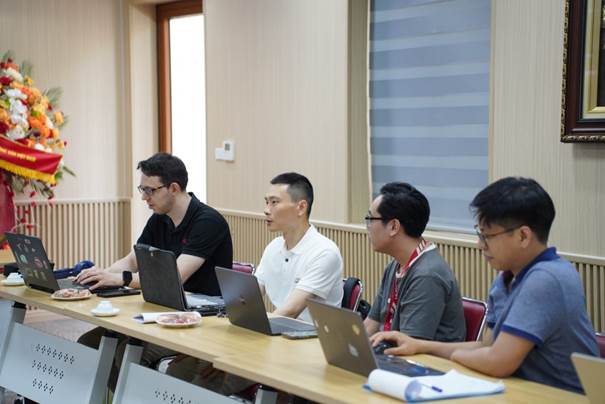
On 21 and 22 May 2026, Maître Pierre-Xavier Chomiac de Sas had the honour of speaking at the international conference co-organised by the law faculties of the University of Montpellier and the University of Hanoi, devoted to the contemporary legal issues raised by esports.
These three presentations outline the contours of an emerging body of esports law: identified stakeholders whose respective liabilities remain unclearly allocated, a legal classification suspended between two regimes, and contracts whose drafting directly determines the legal certainty of clubs and players alike. The field is evolving, the labour courts are beginning to issue rulings, and the legislative framework remains to be consolidated. These issues are of direct concern to clubs, organisations, publishers and agents operating in the sector — please do not hesitate to contact me to discuss them.
The firm regularly advises and acts in negotiations for stakeholders in the esports and video game industries — clubs, organisers, publishers and players — on the full range of these issues: drafting and legal classification of player contracts, structuring relationships with partners and sponsors, protection of image rights and intellectual property rights, and regulatory compliance. These conference engagements form part of that day-to-day practice and provide an opportunity to share its insights with the professional and academic community.
Esports Conference: Montpellier–Hanoi Partnership on Comparative Esports Law
Bringing together academics, practitioners and industry professionals around a comparative Franco-Vietnamese approach, this event provided an opportunity to examine the existing legal tools applicable to a sector in the midst of rapid structuring. The international dimension of the conference allowed perspectives to be broadened: while France has pioneering legislation governing esports, the globalisation of talent and competitions calls for analysis that extends well beyond national borders.
PCS Avocat contributed to three working sessions addressing matters at the heart of the sector’s current concerns: (i) the legal protection of players’ health, (ii) whether esports may be classified as a sport within the meaning of French law, and (iii) the contractual framework applicable to professional players.
These presentations afforded an opportunity to test current positive law against the practical realities of the sector, drawing on situations encountered through our advisory and negotiation practice for stakeholders in the esports and video game industries.


Esports & Video Games: Legal Protection of Esports Players’ Health
The rise of esports, sustained by substantial investment and a structural model patterned on the Olympic framework, has transformed players into genuine professionals, exposed to physical and psychological risks that are now well documented.
See our publication on minor esports players.
The professional player operates at the intersection of three spheres, each carrying distinct risks. In the video game sphere, the player is exposed to addictive mechanisms linked to “gamblification” and to publishers’ aggressive marketing strategies. On the competitive side, the player is subject to constant performance pressure, doping risks and musculoskeletal disorders associated with intensive training. Finally, the digital environment exposes the player to cyberharassment, eye strain and the complex issues surrounding the image rights of the player-as-influencer.
Protection rests on an allocation of obligations among several entities. The club, as employer, is legally bound by a duty of safety — although the tendency to resort to service-provider status in order to reduce social charges exposes such structures to a serious risk of judicial reclassification. The competition organiser is responsible for ensuring compliance with age thresholds and obtaining parental authorisations. The publisher exercises a contractual policing power over the rules, server access and a power to impose sanctions on clubs. Parents remain the guardians of the earnings of minor players, which must be deposited with the Caisse des Dépôts.
French law, through the 2016 statute and recent legislative proposals, seeks to regulate these practices. However, effective protection of players can only be achieved through a regulatory framework engaging all stakeholders in the sector.
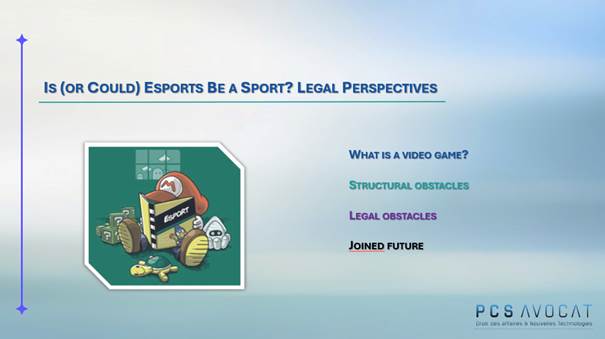
Sport and Esports – Closely Related Sectors but Legally Distinct
Esports has developed by replicating the organisational model of the sports sector. The legislature has nevertheless declined to apply sports law to it, on grounds of a twofold divergence: the nature of the video game as the medium of competition, and the question of its exploitation rights.
Any legal alignment of the two activities runs up against the artistic nature of the video game, which prevails over its sporting characteristics. Furthermore, treating esports competition as a sport raises a significant risk: that of potentially making any digital activity eligible for sporting status, with incalculable consequences.
A second structural obstacle: esports remains dependent on publishers, who own the intellectual property rights. Publishers exercise discretionary control over the rules, server access and the very existence of each discipline — creating a legal dependency that has no equivalent in traditional sports federations.
The two sectors nevertheless remain deeply intertwined. Sport was one of the earliest sources of inspiration for video games, and many contemporary titles offer sporting experiences through virtual reality and connected devices. The esports sector continues to grow steadily, marked by a persistent mimicry of sport: leagues, teams, business models and fan communities.
Against this background, France has stood out for the strength of its institutional support. It is notable that, notwithstanding the formal exclusion of esports from the sports regime, the vast majority of State initiatives in its favour have been undertaken directly by, or in coordination with, the ministries and directorates responsible for sport.
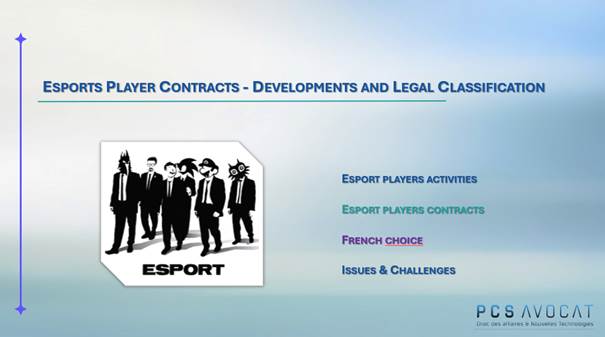
Esports Player Contracts: Developments and Legal Classifications
The growth of the esports economy has required a professionalisation of contractual relationships, which have long been marked by significant legal uncertainty. While esports borrows its conventions from traditional sport, its digital nature gives rise to specific features in terms of player duties, intellectual property and exploitation of players’ image rights.
The 2016 Digital Republic Act introduced a specific fixed-term employment contract for professional esports players. Many organisations nevertheless continue to favour service-provider agreements — an apparent flexibility that exposes clubs to a substantial risk of reclassification as an employment contract whenever a legal relationship of subordination is established. Several rulings to this effect have been handed down in recent years.
The scope of players’ duties is now multidimensional, combining competitive performance and ancillary activities relating to influencer work, modelling and even sport. Contractual drafting must reflect this with precision, as must clauses on remuneration, equipment requirements, health and transfer conditions. Specific child-protection provisions applicable to minor players add a further dimension.
Current thinking encourages a revision of the originally envisaged statutory framework, although no settled solution has yet emerged — particularly against a background of the growing internationalisation of esports talent, which further complicates the question of legal classification and applicable regimes.
Esports & Video Game Law: 2026 PCS Avocat Engagements
This conference is part of the firm’s ongoing engagement and public speaking on the legal issues raised by esports and video games. Over the past few weeks, several professional events have provided an opportunity to address these topics from a range of perspectives:
Game Changers – Women, Law & Esports: Legal Overview of Esports and the Player’s Counsel
Digital Week – Gaming Law: Video Games, Esports & the Platform Economy
Game Evolution Conference – Game-Based Learning and Esports: Connections and Constraints
Indie Game Lyon – Intellectual Property in Video Games
France’s ENC roster is being finalised on paper. But no legal certainty exists yet on the key issues: players’ availability vis-à-vis their clubs, scheduling conflicts with the ENC, prize money distribution, sponsor renegotiations regarding players’ image rights during the relevant period, and more.
Esports stakeholders must act quickly to protect their interests by reviewing their contracts, identifying available options, and securing their position going forward.
Do your contracts cover what happens if your player is selected for the ENC? If you’re not sure, we can help you figure it out — fast.
The first edition of the Esports Nations Cup (ENC) will take place in Riyadh from November 11 to 29, 2026. The event will pit 32 national teams against each other across around fifteen major esports titles, including Valorant, LoL, Dota 2, Apex Legends, PUBG, TFT, Street Fighter & Tekken, Call of Duty, R6, CS2, and Trackmania.
Its organisation has, however, proved challenging. Originally conceived as a stepping stone toward a partnership with the International Olympic Committee for an Olympic Esports Games — a project that was abandoned in late 2025 — the ENC has since faced a string of difficulties: the breakdown with the Korean KeSPA, technical and political constraints in China and the Philippines, disputes over the terms of engagement for Russia and Ukraine, Taiwan’s status, Cuba’s withdrawal, and more.
In France, the absence of a national federation made it difficult to identify a single point of contact capable of coordinating the national delegation. A tender process and particularly fraught negotiations ultimately led to the appointment of an official team manager, Quentin “Zeph” Viguié, who now has the task of assembling a squad of players — the vast majority of whom are under contract.
This situation raises a related issue: esports contracts have become more professional since 2020, but legal representation by a specialist remains the exception at lower levels of competition. Without release clauses, provisions covering liability for injuries, image rights under national colours, or prize money allocation, clubs have neither protection nor leverage. The organiser itself has acknowledged that conflicts between national representation and club obligations are a structural challenge likely to limit participation.
Esports player contracts: France’s persistent headache
The terms under which esports players participate in club activities have always been a sensitive issue within the ecosystem. Despite being a key objective when France’s legal framework was built, the 2026 regulatory regime has not effectively resolved the matter: the fixed-term employment contract, largely modelled on sports law, has seen very limited adoption — due in large part to the financial fragility of clubs.
Significant uncertainty remains today regarding the nature of the club/player relationship, the extent of players’ obligations, and the legal characterisation of their contracts. This uncertainty translates into a real risk of reclassification as an employment contract — a risk that has already materialised in several court decisions in recent years.
Esports player contracts: “Release or not release”
Given the deadlines set by the organisers, national team managers have very little time to assess available talent and identify and address any contractual constraints.
Without a standardised hierarchical framework, esports clubs are not required to release players for national competitions — a first of its kind. As a result, a player’s participation in the ENC will necessarily depend on the specific terms of their contract with their club.
A conflict with other esports events, promotional activities, or club sponsorship obligations is a real risk — one that could place players in breach of contract.
Equally, the conditions of players’ participation, and their legal relationship with the team manager and event organisers, are likely to give rise to highly significant legal issues.
Clubs & esports players: “Ready, Set, Sit down”
An urgent contract audit — imperative, and potentially an opportunity — allows stakeholders to quickly identify the precise scope of their rights and constraints with respect to participation in this landmark event. In some cases, particularly for players bound by contracts supervised or controlled by publishers or international event organisers, additional checks will be required.
Any negotiation between clubs, players, and the official team manager regarding a temporary release will need to carefully address: the exact duration of that release, the financial terms for both the player and the club in the event of lost sponsorship income, liability and insurance arrangements during the player’s employment, the management of image rights throughout the competition, and more.
The ENC 2026 is a wake-up call for the industry: clubs that fail to act now will find themselves in exactly the same position in 2028 — with two additional years of case law working against them.
On May 13, 2026, the law firm PCS Avocat participated in the 10th International Game Evolution Symposium, organized by Antoine Chollet (University of Montpellier) and Philippe Lépinard (University of Paris-Est Créteil), on the theme of “Game-Based Learning – Esports – Management.”
Pierre-Xavier Chomiac de Sas presented a paper entitled “Esports & Pedagogy: A Convergence Under Legal Constraints,” examining the legal conditions for integrating esports into education. Far from being a neutral educational tool, esports operates within a private, contractual, and competitive ecosystem dominated by publisher power—a dynamic that directly conflicts with the principles of public education.
Watch the full conference here:
10th Game Evolution Conference
For ten years, the international Game Evolution Conference has brought together researchers and practitioners to explore the uses of games—video games, board games, role-playing games, and wargames—as tools for learning, managerial innovation, and organizational reflection. This tenth edition, organized by Antoine Chollet (Montpellier Research in Management) and Philippe Lépinard (Institute for Management Research), was held online with Twitch streaming, featuring four thematic sessions and several plenary sessions.
The firm’s presentation took place in Session 3 — “The Game-Based Learning Ecosystem and Beyond” — alongside presentations on acquiring managerial skills through game-based learning, organizational choices for implementing a Babel role-playing game in a business school, and the sector-specific characteristics of tabletop role-playing games in France and Italy.
Esports: An Ecosystem Difficult to Integrate with Education
The video game industry has long been the subject of misconceptions regarding its effects — particularly on young people. Conversely, a growing number of academic studies are now exploring the educational value of video games, leveraging their immersive, simulation, and cooperative capabilities. Within this movement, esports benefits from relative goodwill, perceived as combining sporting values and digital skills.
However, the presentation highlighted a structural contradiction: esports is primarily a private, contractual, commercial, and competitive sector, whose educational use faces two sets of obstacles.
A sector under private control: the power of the publisher
Unlike traditional sports, the medium of esports competition—the video game—is a work of the mind over which the publisher retains legal and technical control. This control is exercised on three cumulative levels. First, on the legal level, access to the game requires consent to an End User License Agreement (EULA) and the competition rules, from which publishers derive broad sanctioning powers (account suspension, prosecution for copyright infringement). The educational exception in Article L. 122-5 of the French Intellectual Property Code does not appear to encompass the esports and educational use of video games.
Furthermore, from a technical standpoint, the mandatory connection to online servers and accounts, combined with the dematerialization of media, deprives players of full and stable autonomy over the games they access (on these issues, see our publication RLDI 2024.11 — Video Games & Virtual Goods: A Property Struggle Between Publishers and Players). Several precedents illustrate the instability of video games as an educational tool: the removal of Fortnite from mobile platforms during the Epic Games/Apple dispute; the shutdown of The Crew servers by Ubisoft.
Finally, from an evolutionary standpoint, automatic updates can profoundly alter game content and its associated age rating, integrate new monetization mechanisms, dark patterns, or modify moderation policies (see our guide Video Games, Dark Patterns & Dynamic Pricing).
A legally complex sector: esports law
Law No. 2016-1321 of October 7, 2016, for a Digital Republic, provided France with its first legal framework governing video game competitions (organizational conditions, professional player status), while denying them the classification of a sport. This foundation was further defined by Decrees No. 2017-871 and No. 2017-872 of May 9, 2017. More recently, a bill “for responsible and attractive esports,” introduced on November 18, 2025, aims to modernize this framework.
Beyond this core, esports draws upon a complex array of regulations—communications law, platform liability, advertising and consumer law, personal data protection, intellectual property, and software law—in addition to the specific rules applicable to each category of stakeholders (publishers, clubs, players, organizers, broadcasters, sponsors).
This architecture, based on contractual freedom and the primacy of the private sector, directly conflicts with the requirements of the public education service: neutrality, transparency, equal access, and student protection. Schools cannot freely accept clauses that limit students’ rights or subject educational activities to unilateral rules set by private companies.
Esports: An Activity Compatible with Education Under Certain Conditions
While the esports ecosystem presents structural incompatibilities with education, the presentation argued that a reconciliation remains possible, under two conditions: a thorough understanding of the risks imported from the sector into schools, and a controlled division of responsibilities between private and public actors.
The Importation of Esports Risks into Education
The pedagogical practice of esports exposes its users to the effects of a model designed for entertainment and performance. Five risk categories have been identified: (i) screen time and its health consequences (sleep deprivation, sedentary lifestyle, chronic illnesses); (ii) the addictive nature of certain games, which can foster cyberaddiction; (iii) psychological difficulties common in the intensive sports sector (stress, injuries, metabolic disorders—see our guide “Esports Player, Health & Law”); (iv) media exposure linked to streaming and content creation practices, which is particularly concerning among teenagers; (v) tensions and toxic behaviors in a competitive school setting (exclusion, harassment, online bullying).
In addition to these risks, there is a potential imbalance in the teacher-student relationship itself: the teacher may find themselves losing authority in the face of game rules and mechanics that ultimately remain dictated by the publisher and its commercial objectives.
Adapting Responsibilities in the School Setting
The school setting cannot adopt the objectives of professional clubs—profitability, image monetization, and sponsorship strategies. It is the responsibility of those involved in educational esports to respect the obligations specific to the organization of such activities: user licenses, integrity and security of competitions, administrative declarations, student protection, equipment compliance, and cheating prevention.
The protections provided by the Labor Code for professional esports players appear inapplicable in an educational context. Responsibility then falls to other stakeholders: the event organizer (obligations of Article R. 324-3 of the Internal Security Code regarding the prohibition of participation of minors under twelve years of age in competitions with monetary prizes, and of Article R. 324-4 of the Internal Security Code regarding the requirement for written parental authorization); and the minor’s legal guardians, who are responsible for the protection and supervision of their child. The game publisher is liable under the duty to inform consumers (Decree No. 96-360 of April 23, 1996) and the protection of minors through the PEGI rating system established by Articles 32 and 33 of Law No. 98-468 of June 17, 1998.
The school and its headteacher are also bound by an obligation of safety and supervision towards students: compliance of equipment, legality of the games used, appropriateness of content, respect for the GDPR and image rights, and prevention of psychosocial risks specific to competition. The liability of public authorities could be invoked, to a lesser extent, insofar as they assume, finance, or participate in the physical or digital organization of the activities.
Esports and Game-Based Learning: A Developing Legal Framework
This oral presentation is based on a feature article—”Esports & Pedagogy: A Convergence Under Legal Constraints”—which expands on these analyses, structured around two parts (the structural incompatibility of esports with education / conditions for reconciliation) and supported by some twenty case law, doctrinal, and institutional references.
The full article will be published soon in a legal journal. Specific references will be added to this publication as they become available.
The firm thanks Antoine Chollet (University of Montpellier) and Philippe Lépinard (University of Paris-Est Créteil) for organizing the event and inviting them to speak, the directors of the MRM and IRG laboratories, as well as all the speakers and participants for the quality of the discussions during this tenth edition of the conference.
Pour aller plus loin
- Page d’expertise — E-sport & jeux vidéo
- RLDI 2024.11 — Jeux vidéo & biens virtuels : une lutte de propriété entre éditeurs et joueurs
- Guide — Jeux vidéo, dark patterns & dynamic pricing
- Guide — Joueur esport, santé & droit
- 2025.12.15 – L’esport sera(it)-il un sport ?
On May 18, 2026, ethics training was held for the new group of lawyer-led legaltech projects incubated by the Paris Bar Incubator.
Delivered at the offices of Kanbios, a partner of the Paris Bar in this area, the lawyers leading the various projects under development were able to discuss the legal and ethical compliance of their projects.
IBP – 2026 Incubation Program Second Session
The Paris Bar Incubator offers this training to all lawyers who have completed the IBP incubation program.
This program offers selected colleagues a 3-month intensive support program to help them move from idea to a functional solution, and potentially more. A maximum of 4 new projects will be selected for the next session, which will run from mid-April to mid-July 2026.
Participants will dedicate the equivalent of at least half their time to developing their legal tech startup alongside leading experts in the legal and judicial innovation ecosystem (coaching, workshops, and inspiring presentations, etc.), in accordance with the incubatees’ charter.
Lawyer LegalTech – Related and Ancillary Business Activities
At the request of many entrepreneurial colleagues, the Paris Bar Incubator offers all lawyers who have completed its incubation program training each year on the legal and ethical framework applicable to lawyers developing digital solutions through related and ancillary business activities.
Led by Amaury Sonet (Valmy Avocats), former member of the Bar Council, and Pierre Xavier Chomiac de Sas (PCS Avocat), this new session—enriched and amended—delves deeper into the practical points of vigilance identified in previous sessions, addressing the specific questions raised by lawyers currently structuring their legal tech projects.
As a reminder, the National Bar Council, in its 2023 resolution concerning exceptional commercial activities, reiterated the strict and full application of all ethical rules—particularly the National Internal Regulations (RIN)—to lawyers developing commercial activities related to their profession.
Lawyers’ LegalTech – Points of Vigilance
- Dedicated Company or Firm Service? A crucial choice between activity carried out by the firm and the creation of a separate commercial entity. This choice has significant ethical, tax, and operational implications that are crucial for the long-term viability of the project.
- Exclusion of legal advice and special mandates. Strict delimitation of the scope of the company’s activities. Identification of acts falling under the exclusive purview of lawyers and separation of the two activities. The company may not engage in any activity related to legal advice or court representation.
- Structuring financial flows, invoicing, and agreements. Invoicing, agreements between the firm and the company, prohibition of fee sharing, and compensation for business referrals. Financial flows between the firm and the legaltech company must be structured from the outset to avoid any reclassification or ethical breaches.
- Anticipating fundraising conditions. Specific constraints related to the status of a lawyer who is also a shareholder or director: shareholder agreements, investor rights, approval clauses, and adherence to essential principles. Fundraising requires anticipating the ethical framework applicable to the structure.
Lawyer Legaltech – Operational Structuring
Articles of Association & Corporate Purpose. Drafting the corporate purpose with the necessary wording to avoid any invalidity in the event of activity falling under the lawyer’s monopoly. Critical point in the initial structuring of the company.
Insurance & Liability. Coverage for the lawyer’s and the company’s professional civil liability. Coordination of guarantees and identification of risk areas not covered by existing policies.
Chinese Wall & Data Separation. Implementation of watertight information barriers between the firm’s activities and those of the company. Professional secrecy, GDPR, separation of information systems and access.
Professional formalities. Registration with the Bar Association, verification of the requirements of the bar association, and transparency obligations regarding related activities. Consult with the Bar Council during the structuring phase.
Conflict of interest detection procedures. Mapping of potential conflicts of interest between the activities of the firm, the company, and its clients. Implementation of formalized procedures for screening and managing conflicts of interest.
Networking & clubs. Ethical framework for participation in collective structures (investor clubs, founders’ networks). Applicable rules regarding communication, solicitation, and information sharing.
Contents
- Introduction and stakeholders of Esports
- The legal regime of esports and the status of the professional player
- The place and role of the lawyer in the esports ecosystem
- Media exposure of female players and platform liability
- Legal framework of esports: necessary and sufficient regulation?
- Further reading
On the occasion of the event “Game Changers: Women, Law & E-sport,” held on 12 May 2026 in Paris by the lawyers’ association Les Maîtres du Game and the Union des Jeunes Avocats de Paris (UJA Paris), the firm PCS Avocat took part alongside Me Anna Loubière (Enthropy firm), under the moderation of Me Justine Pallo-Leduc.
Titled “Legal overview of e-sport & the lawyer advising the e-sport player,” this first round table reviewed the legal framework applicable to esports and the role of the lawyer in this ecosystem, before giving the floor to Raphaëlle Cordes (journalist and sports commentator, founder of POG tv), Me Laura Ben Kemoun (LBK Avocats), the Re//Make association and the Women in Games France association represented by Anna Bressan, to present and contextualise the place of women in today’s esports ecosystem.
Presentation and Esports professionnals
Esports is legally defined as a video game competition. This deliberately broad definition reflects the impossibility of fixing both an exhaustive list of games and the criteria for identifying an esports competition. It also extends the absence of a strict definition of sport in French law, which rests more on a body of indicia laid down by the administrative courts than on a clear-cut qualification (see our publication “2025.12.15 – Is esports a sport?”).
The esports ecosystem brings together a particularly wide range of stakeholders: video game publishers (owners of the works underlying the competitions), esports clubs and structures, professional players, support staff (coaches, analysts, mental and physical trainers), agents, competition organisers, broadcasters and streaming platforms, commentators and content creators, as well as peripheral professions (professional associations, lobbyists, production companies).
This diversity of stakeholders explains the complexity of the legal issues encountered, each being subject to its own regime and to specific contractual relationships (for more information, see our book “Droit et métiers de l’esport” published by Ellipses).
The mapping of esports stakeholders shows a marked gender imbalance — professional female players, women heading clubs, event organisers, journalists and specialist casters, and legal advisers within the ecosystem all remain in the minority.
The Re//Make and Women in Games France associations highlighted on this occasion the importance of giving visibility to this female presence and of questioning the structural obstacles to balanced representation.
The legal regime of esports and the status of the professional player
Law No. 2016-1321 of 7 October 2016 for a Digital Republic gave France a legal regime specific to esports — one of the first in Europe. The legislature deliberately excluded the application of the sport regime, the video game underlying the competition remaining a work of the mind, the intellectual property of its publisher.
Article 102 of this law in particular introduced a dedicated employment contract for salaried professional players, directly modelled on the fixed-term sports contract (CDD sportif). In practice, this scheme remains little or not at all used by industry participants: its conditions are seen as difficult to implement and too restrictive for clubs, which sustains an ongoing risk of reclassification of contractual relationships.
Beyond this foundation, esports involves many other regimes: intellectual property (ownership of rights in the game and its content), advertising and sponsorship law, platform liability (hosting providers, online public communication services), audiovisual communication law, GDPR (mass collection of player and spectator data), as well as the new frameworks applicable to artificial intelligence.
The “women’s” competitions organised by certain publishers and organisers raise, in this context, major issues: instability of women’s leagues, precariousness of female players’ contracts compared to men’s, systematic disparities in remuneration, eligibility criteria, articulation with open competitions, and the treatment of female players identified as such for promotional or marketing purposes.
The place and role of the lawyer in the esports ecosystem
When asked about this question, the lawyer intervenes in several capacities within the esports ecosystem. They first act as adviser to the various professionals — publishers, clubs, organisers, players, agents, broadcasters — on all the legal issues raised by their activity: structuring, contracts, intellectual property, regulatory compliance, litigation.
The lawyer may also carry out mediation work, in particular to resolve disputes between players and clubs or between organisers and competition participants, and may also assist clients through the status of esports agent (contract negotiation, structuring of partnership relationships).
This plurality of roles requires an in-depth knowledge of the ecosystem, of how publishers operate and of the specific features of competitions. PCS Avocat handles these matters within its dedicated E-sport & video games practice.
Media exposure of female players and platform liability
The media exposure of esports athletes — through streaming, official competitions and clubs’ communications — exposes them to heightened risks, in particular cyberharassment, doxing and, more generally, all press offences. These attacks may originate on social networks, broadcasting platforms or the chat features built into the video games themselves.
Female players and content creators in the esports sector are statistically more exposed to certain forms of cyberviolence, in particular of a sexist or sexual nature. This was highlighted in particular during the round tables organised by the French Senate on sexism in video games and streaming and in esports.
This reality calls for contractual vigilance (protective clauses in club–player contracts, support for structures), prompt activation of platforms’ reporting mechanisms and, where appropriate, legal action on the basis of press offences and the criminal provisions applicable to cyberharassment.
The liability of the platforms concerned — publishers, social networks, broadcasting platforms — crystallises around the distinction between hosting provider and editor and the conditions for its application. This dichotomy, inherited from the French Law on Confidence in the Digital Economy and now supplemented by the European Digital Services Act (DSA), determines the scope of the applicable obligations: removal of manifestly unlawful content, proactive moderation or otherwise, traceability, and reporting mechanisms.
The effective protection of players is made more complex by an operational reality: while all platforms share a common legal foundation, each has its own terms of service, its own acquisition and retention strategies, and its own tolerance regarding freedom of expression and moderation. The result is uneven protection, calling for strategies tailored on a case-by-case basis (reporting, formal notice, legal action, referral to the competent authorities).
Legal framework of esports: necessary and sufficient regulation?
Esports brings together a large number of stakeholders with sometimes divergent interests: publishers and game creators, players, staff and clubs, event organisers, broadcasters and commentators, peripheral professions (agents, associations, lobbyists). The French legal framework alone cannot resolve all the issues raised by this plurality.
The sector is now organising itself around a co-regulatory approach, structured in four stages: (i) the implementation by professionals themselves of good practices; (ii) the periodic monitoring and oversight of all stakeholders; (iii) the legislative endorsement of proven good practices; and (iv) the sanctioning of demonstrated abuses.
This model can already be seen on several topics: oversight of advertising practices, the fight against misleading commercial practices, the treatment of loot boxes, regulation of esports betting, and the protection of minors. It calls for ongoing dialogue between economic actors, authorities (ARCOM, ANJ, CNIL, DGCCRF), associations and legal advisers.
Structuring the place of women in the esports ecosystem also falls within a co-regulatory logic: good-practice agreements led by associations (Re//Make, Women in Games France), charters adopted by clubs and event organisers, partnerships with women’s or mixed competitions. This momentum would benefit from being gradually integrated into the contractual and regulatory arrangements applicable to the sector.
Further reading
- Practice area — E-sport & video games
- Is esports a sport? (Juriste International)
- Digital Week – Gaming, video games & esports law
- Website of the Union des Jeunes Avocats de Paris (UJA Paris)
- Les Maîtres du Game (Sports au Barreau)
Table of Contents
Following an article published by RMC regarding dynamic pricing practices, PCS Avocat was asked to provide legal insight into consumer rights concerning the price surcharges observed during the purchase of Céline Dion concert tickets.
Read the article on RMC: “Concert tickets, trains… In the event of a surcharge due to dynamic pricing, can you demand a refund?”, published on April 22, 2026.
Dynamic Pricing: Adapting Supply and Demand in Real Time
Dynamic pricing refers to mechanisms for selling goods and services that involve real-time variations in the proposed price based on specific criteria: supply and demand, the time period involved, geographic zones, etc.
The increasing complexity of algorithms and observed practices has raised growing questions regarding the actual mechanisms of dynamic pricing and the fair protection of consumers.
Dynamic Pricing: From SNCF to Oasis & Céline Dion
Initial and Derived Sectors. Long restricted to the aviation, energy, and hospitality sectors, the use of dynamic pricing has progressively expanded to many other fields: show and concert ticketing, rail transport (SNCF), streaming platforms, online retail, and even fast food.
Issues in Concert Venues. Recent years have seen numerous examples of concert ticket sales sparking criticism or complaints related to observed dynamic pricing practices:
- Bruce Springsteen (2022–2023, then the “Land of Hope and Dreams Tour – 2026”) where fans faced dynamic pricing via Ticketmaster, with some tickets selling for several thousand dollars.
- Taylor Swift / Eras Tour (2022–2024), leading the U.S. Senate to subpoena Ticketmaster and Live Nation to obtain documents on their pricing practices, fees, and resale methods.
- Oasis: More recently, the group’s announcement of a new tour in August 2024 drove millions of fans to the Ticketmaster website. The algorithm of the overwhelmed platform reportedly caused ticket prices to triple.
Abusive Dynamic Pricing Practices – Reaction of Authorities
Various state authorities are increasingly investigating the legality of concert ticket purchase conditions.
In May 2024, the Department of Justice launched an antitrust action against Live Nation-Ticketmaster, seeking to dissolve the merger.
- Oasis Authority: Regarding the Oasis concerts, the British Competition and Markets Authority (CMA) opened an investigation against Ticketmaster, potentially followed by the European Commission, which is also reportedly preparing an inquiry.
- In the wake of this, the British government launched a “call for evidence” in January 2025 regarding pricing practices in the live performance sector, aimed at understanding how ticketing works and its impact on consumers.
- Céline Dion Authorities: Following numerous reports from dissatisfied or significantly financially impacted fans, the DGCCRF opened an investigation on April 10, 2026, to monitor the existence of misleading or unfair commercial practices.
It is in this context that RMC approached PCS Avocat to analyze the rights available to consumers faced with an unexpected surcharge or a price variation deemed abusive between the time of browsing and the time of payment.
Dynamic Pricing: Legal yet Frustrating Practices
These practices involving price modulation are, in principle, legal under French and European law. However, certain practices can lead to abuse and constitute civil or criminal offenses.
The Consumer Code and the European Directive on Consumer Rights regulate practices likely to mislead the consumer regarding the effectively applicable price. Consumer law imposes a clear pre-contractual information obligation on professionals, particularly regarding the final displayed price, under penalty of sanctions.
A price variation between the start of browsing and the moment of payment, or the practice of artificially displaying limited stock to induce a purchase, can be classified as misleading commercial practices under Articles L. 121-1 et seq. of the Consumer Code.
Pricing dark patterns—a concept the firm analyzed in its guide dedicated to abusive practices in the digital sector—represent a rapidly developing area of legal investigation in this regard.
Illicit Dynamic Pricing: Available Recourses for Consumers
Depending on the situation, several paths are open to aggrieved consumers: a request for a refund based on the right of withdrawal within legal timeframes, a report to the DGCCRF (Directorate General for Competition, Consumer Affairs and Fraud Control), or the use of consumer mediation before any legal proceedings.
In the most serious cases, legal action for unfair commercial practices remains an option.
Find all our publications and interventions related to this topic:
- Guide – Video games, dark patterns & dynamic pricing
- Digital consumer law – PCS Avocat publications
- Our expertise in new technology law
PCS Avocat regularly appears in the media to provide legal insight into issues related to digital law, data protection, and new technologies. Find all our interventions here.
Presentation
—
During the Digital Week—organized by the Paris Bar Association (Ordre des avocats de Paris) from March 30 to April 3—our firm had the pleasure of presenting, alongside Sophie Roman and Mathieu Bui, on contemporary legal issues within the field of Gaming Law.
Aimed at industry professionals, the session explored the significance of this major cultural sector, the contemporary legal challenges faced by its stakeholders, and the opportunities it presents.
View the full Digital Week program here: https://lnkd.in/eHZFkwPX
Video Games and Gaming: Toward a Convergence of Applicable Laws
As the leading cultural industry—boasting substantial economic figures—the video game sector currently gives rise to a host of complex issues. Long pigeonholed as mere software, video games are now recognized as “complex works,” situated at the crossroads of multiple legal disciplines.
The objective of this training session was to examine how the law frames this burgeoning creativity while simultaneously safeguarding both economic stakeholders and end-users. Between the consolidation of traditional legal principles (intellectual property, contract law) and the emergence of novel or atypical regulations (gambling laws, misleading commercial practices, generative AI, JONUM, platform regulation), the legal framework governing the gaming industry is continuously evolving in tandem with the sector’s growth.

Video Game Law: From Creation to Interaction
Under French law, the video game suffers from a semantic paradox: it enjoys no legal definition within the Intellectual Property Code, existing textually only through the General Tax Code for the purposes of tax credits.
This lack of formal status long compelled judges to treat the video game merely as simple software (under a unitary legal regime). However, technological and artistic evolution led to a major jurisprudential shift with the 2009 Cryo ruling, in which the Court of Cassation formally recognized the status of the video game as a “complex work.” This distributive regime now allows for the application of specific legal rules to each individual component of the game, rather than subjecting the entire work to the restrictive legal framework governing software.
This legal classification underscores the exceptional density of copyright-protectable elements contained within a single production. Indeed, a video game aggregates a multitude of creative works: lines of code and database architecture, but also storylines, musical compositions, graphics, character designs, and sometimes even motion-capture choreography. From a legal standpoint, this layering of elements necessitates rigorous management of the chain of rights.
Each contributor potentially holds copyright over their specific creative contribution; consequently, studios are required to secure the assignment of these rights through highly precise employment or service agreements to prevent any ownership claim from blocking the commercial exploitation or subsequent updating of the game.

Video Game Ownership and Content: A Legal Puzzle?
The training session focused on highlighting the complexities surrounding the ownership of the products and services that video games represent today.
Video Game Creation: Addressing the challenges of asset protection through licensing and the determination of rights ownership.
Video Game Distribution: Revealing the significant evolution of ownership frameworks—marked by the pivotal shift from physical media to digital formats—and raising complex questions regarding the exhaustion of rights and the digital secondary market (as illustrated by the Steam and UsedSoft case law).
Player-Driven Creation and Usage: Activities undertaken by players—particularly through user-generated content (UGC), mods, and fan games—give rise to additional legal issues concerning the ownership of in-game assets.
Artificial Intelligence (Generative AI) and Video Games: Particular emphasis was placed on generative AI, which is revolutionizing artistic direction and presenting unprecedented challenges regarding unintentional copyright infringement and the protection of creative works under copyright law.

Gaming Law: Advertising, Studio Liability, Personal Data, Distribution, etc.
The video game sector sits at the intersection of various digital industries. As such, it has proven insightful to examine gaming through the lens of the various branches of applicable digital law:
- The distribution of video game content via online platforms or television broadcasts;
- Studio liability regarding player behavior;
- The transparency requirements mandated in advertising;
- The regulation of digital marketplaces under the aegis of the Digital Markets Act (DMA);
- The protection of personal data—which is extensively collected and utilized within the sector—among other issues.
Emerging Gaming Law Issues: Dark Patterns, Loot Boxes, & AI Litigation
Gaming law is undergoing a profound transformation, shedding its former image as a “lawless zone” to enter an era of rigorous regulation centered on user protection and interface ethics.
This newfound maturity is particularly evident in legal scholarship and court proceedings challenging “Dark Patterns”—design features found in certain games, particularly mobile titles. These mechanisms—which straddle the line between optimizing the player experience and manipulating the consumer—exploit players’ cognitive biases to induce impulse purchases or to make the subscription cancellation process unreasonably complex.
Concurrently, lawmakers are addressing the growing convergence between digital entertainment and gambling. The regulation of “loot boxes”—and the emergence of JONUM (Games with Monetizable Digital Objects) incorporating NFTs—underscore this determination to clarify the boundary between the gaming economy and the betting economy, with the aim of preventing risks associated with addiction and financial exploitation.
FreeFortnite & Palworld: This era of regulation is also marked by high-profile legal clashes. The standoff between Epic Games and Apple—sparked by the mobile version of the game Fortnite—symbolizes a challenge to closed ecosystems and the monopolistic practices of digital marketplaces, paving the way for greater freedom of distribution.
In the realm of pure creative endeavor, legal disputes such as the Nintendo vs. Palworld case raise fundamental questions regarding the boundaries of intellectual property when weighed against artistic inspiration and video game genre conventions. These lawsuits are not merely commercial disputes; they establish major precedents that define the precarious balance between protecting the legacy assets of industry giants and fostering the need for innovation among new entrants.

The Curious Legal Landscape of Esports: A Flourishing World of Video Game Competitions
Video game competitions—or “esports”—distinguish themselves within the broader gaming sector through the application of a legal framework rendered complex by the diverse array of stakeholders involved. Indeed, this hybrid legal framework appears to struggle to strike a balance between the strict regulations introduced by the 2016 Digital Republic Act and the actual practices of industry professionals, which oscillate between the legal regimes governing traditional sports, event management, and advertising partnerships.

Beyond the minimalist legal framework established by the legislature to ensure maximum freedom for the sector’s growth, esports law entails mastering the issues pertinent to the various stakeholders involved in video game competitions: game publishers and their absolute control over the video games serving as the basis for competition; the structuring of team operations—particularly their contractual relationships with players; the challenges associated with organizing esports events; and the regulatory oversight of their broadcasting, notably via dedicated social media platforms such as Twitch, YouTube, and others.
This structural dependence on rights holders complicates the entire value chain, particularly regarding issues related to sponsorship, ticketing, and audiovisual broadcasting.
The specific challenges facing the esports sector reflect the immense diversity of its practices and stakeholders:
- The legal nexus between traditional sports and esports highlights a fundamental distinction: whereas a discipline such as football is “rights-free,” esports is predicated upon an intellectual work owned by a publisher. The latter exercises sovereign authority over its title—a fact that directly impacts the organization of competitions and the long-term viability of investments.
Read our dedicated publication on this topic: December 15, 2025 – Is (or Could) Esports Be a Sport?
- The organization of esports events entails compliance with a significant number of diverse obligations—a process that becomes increasingly complex depending on the scale of the competition and the specific stakeholders involved.
See our publication covering these points: A Guide to the Legal Framework for Competitions.
- The contractual relationship between clubs and players was intended to be stabilized by the 2016 Act and the introduction of the “esports fixed-term contract.” However, the reality of the activities performed by players often extends beyond the strict confines of employment, taking place outside the specific legal framework established by the law. This creates an ongoing risk of contract reclassification—specifically, the risk that the arrangement could be reclassified as a standard employment contract—a risk that clubs must scrupulously monitor. Other issues—including the status of esports agents, the regulation of specialized sponsorship, the protection of player health and integrity, and esports betting—were also addressed to complete the legal framework applicable to the gaming sector.
We would like to thank everyone in attendance for the discussions and for sharing our passion for video games.

Following our training courses at the University of Reims Champagne-Ardenne dedicated to video game and esports law, Mr. Chomiac de Sas led a workshop at the Paris campus of Game Quest (Gaming Campus) to offer second-year Gaming Business students a module on the law of entrepreneurs.
Focusing on the digital and gaming sectors, the students spent ten days auditing various companies and products to identify their business models, growth drivers, challenges, and legal disputes.

Gaming Companies: Unique Challenges and Perspectives
Focusing on the digital and gaming sectors, the students spent ten days auditing various companies and products to identify their business models, growth drivers, challenges, and legal disputes.
After ten days of research, analysis, and structuring their topics, they presented their findings in English in a professional format, covering a range of engaging themes:
- The Webedia Group
- Games Workshop and the Warhammer license
- Riot Games
- EA Games
- Nintendo
- Clair Obscur and the Sandfall studio
Congratulations to all the students who dedicated themselves to these projects. Discover the various selected topics analyzed through a legal lens:
Webedia – “I always dreamed of founding a media chain… and I did it.”
Webedia has established itself as a key player in the French digital landscape thanks to a targeted acquisition strategy and the building of a vast portfolio of online media. Since its creation in 2007, the group has integrated strong brands such as Allociné, Jeuxvideo.com, Purepeople, 750g, and EasyVoyage, thus consolidating a dominant presence in the entertainment, film, gaming, food, and lifestyle sectors. This growth also relies on the production of digital content through its in-house studios and on partnerships with creators and influencers, allowing it to control the publishing, distribution, and monetization of content. Webedia is thus positioning itself as a media-tech company capable of exploiting digital platforms on a large scale, drawing on more than fifteen years of expertise in audience analysis and the creation of engaging content.

This momentum is accompanied by significant economic strength and growing ambitions in the audiovisual sector. A subsidiary of the Fimalac group, Webedia benefits from stable financial support and a network of diversified subsidiaries, ranging from audiovisual production (Elephant, IDZ Prod) to data and digital marketing. The group employs approximately 2,000 people and generates an estimated revenue of €400 million, with a net profit of around €60 million, demonstrating sustainable profitability. Its current strategy aims to strengthen its resilience against digital giants, develop new acquisitions, and invest in artificial intelligence and premium video formats. Recent partnerships, notably with M6+ to enhance the distribution of film and series content, illustrate this desire to become a key player in the French audiovisual and streaming market.
Nintendo’s empire: “Niiiiiiiintendoooooooo!”
Nintendo has established itself as one of the historical pillars of video games thanks to a model based on the creation and complete control of its own universes. The company develops and distributes both consoles—from the NES to the Switch—and games from franchises that have become global cultural touchstones, such as Super Mario, The Legend of Zelda, Pokémon, Metroid, and Super Smash Bros.
This vertical integration allows it to control the user experience from end to end, from hardware design to gameplay storytelling, while consolidating a portfolio of cross-generational franchises.
This unique positioning ensures remarkable economic stability: its franchises are regularly renewed, its consoles are massively successful, and its strategy relies more on gameplay innovation than on the race for technological power. Nintendo thus occupies a singular place in the industry, distinct from Sony and Microsoft, by prioritizing creativity, accessibility, and the strength of its brands.

This strength does not preclude structural risks, which Nintendo is addressing cautiously. The company cannot be acquired because it is owned by a group of Japanese institutional investors—banks, industrial conglomerates, and domestic investors—who guarantee its strategic independence but also limit its financial flexibility.
It must contend with increasing technological dependence, online infrastructure that is less competitive than that of its rivals, and a sometimes conservative positioning, particularly in esports and online services. Its rivals are numerous: console manufacturers, PC platforms like Steam, mobile games, and live service giants such as Fortnite and Roblox, which capture a significant share of players’ attention.
Nintendo’s future will depend on its ability to invest in cloud gaming, integrate AI into its development tools, strengthen the appeal of its franchises in the face of mobile competition, and maintain player engagement in a market where attention has become a scarce resource.
Games Workshop: Warhammer
Founded in 1975, the British company Games Workshop initially specialized in manufacturing board games. It distinguished itself by becoming the leading importer of Dungeons & Dragons and later a publisher of its own wargames and role-playing games, competing with companies like Privateer Press (Warmachine/Hordes) and, more broadly, the board game and miniatures lines of Hasbro/Wizards of the Coast.
The development of their licenses has followed a controlled transmedia strategy: Warhammer and Warhammer 40,000 remain at the heart of their business, through game rules, miniatures, and books, but also lead to numerous licensing partnerships for video games, novels, comics, and related merchandise. Games Workshop licenses its universes to third-party studios for video game adaptations (for example, the Warhammer 40,000: Space Marine or Total War: Warhammer series), allowing it to reach a much wider audience while retaining control over the visual and narrative guidelines.
This strategy strengthens the value of its intellectual properties: the universes become cultural brands in their own right, capable of generating recurring revenue both through direct sales of miniatures in its own retail network and through licensing royalties.

Economically, it’s clear that Games Workshop enjoys a near-monopoly in its sector. In 2025, the group posted revenues of approximately £617.5 million, up 18% compared to 2024, with a net profit of around £196.1 million and a margin of approximately 32%.
These figures demonstrate the remarkable economic stability of the model: a loyal global fan base, control of the value chain, and the ability to monetize licenses digitally. This suggests favorable prospects for organic growth (new editions, new games) and geographic expansion, despite increased competition in miniature wargaming and the rise of 3D-printed alternatives.

Riot Games: You’d die for the cause, but you won’t fight for one
Inspired by the legendary Defense of the Ancients, Riot Games grew from a single title, League of Legends, launched in 2009, to become a major player in the global competitive gaming scene. The company has progressively expanded its expertise by creating a true ecosystem around its flagship game: professional leagues, international championships, community tools, and narrative content.
Following Tencent’s investment in 2011 and its complete acquisition in 2015, Riot accelerated its diversification with Valorant, Legends of Runeterra, Teamfight Tactics, and transmedia projects like the Arcane series. This evolution has transformed Riot into a structured multimedia group, while maintaining an identity based on a “player-first” approach and esports as its growth engine.

For Tencent, Riot Games holds a strategic position in a global vision to dominate the video game industry through investment, consolidation, and control of competitive ecosystems. The gradual acquisition of Riot—from the initial investment in 2008 to the full takeover in 2015—is part of a strategy to acquire key studios in order to secure global licenses, strengthen its presence outside of China, and develop technological and commercial synergies.
Riot is one of the pillars of this strategy: League of Legends is one of the most popular PC games in the world, and its esports model serves as an international showcase for Tencent. The integration of Riot enhances the group’s competitiveness and supports its global expansion, while also being part of a long-term strategy to strengthen its efficiency and dominant market position.

Electronic Arts: From California’s Apple to Saudi Arabia’s PIF
Founded by former Apple executives, Electronic Arts occupies a central position in the industry thanks to its role as a global publisher, structured around the production of AAA narrative games, the exploitation of renowned licenses, and the management of vast online communities.
As a publisher, EA handles and controls the distribution, marketing, licensing, and commercial exploitation of its franchises, allowing it to secure stable revenue and structure the ecosystem around its flagship titles such as EA Sports FC, Madden, and Apex Legends. Live services now constitute the majority of its growth, supported by a marketing strategy that transforms each annual release into a platform for continuous engagement.
This publishing power is based on a policy of acquiring and integrating studios that has long shaped the group’s identity. Historically, EA has acquired studios to secure expertise (BioWare for RPGs, DICE for FPS games, Respawn for action-adventure and multiplayer), but also to lock down strategic licenses. This strategy allows for the industrialization of productions, the pooling of technologies, and ensures commercial consistency across the different divisions.
This vertical integration reinforces its position as a dominant publisher, capable of simultaneously managing creation, distribution, and exploitation.

Finally, EA is one of the most emblematic players in monetization experimentation, a field where it has often been a pioneer… and sometimes controversial. The company has progressively shifted its business model towards live services, seasonal content, premium passes, and microtransactions, which now constitute the majority of its revenue.
Sports licenses, in particular, serve as a testing ground for these models: collectible cards, persistent competitive modes, live events, and content refreshed each season. This strategy aims to transform each game into a sustainable platform, maximizing retention and value per player. It is part of a vision where the publisher no longer sells just a product, but a complete, connected, and long-term monetized ecosystem.
The $55 billion acquisition of Electronic Arts by a consortium led by the Saudi sovereign wealth fund PIF repositions the publisher as a major strategic lever in the Kingdom’s transformation towards a digital and entertainment economy, offering a complete gaming ecosystem from esports to development studios.
Clair Obscur: Expedition 33 – An “Indie” Game or an “AA” Game?
A major French video game success, “Clair Obscur: Expedition 33,” published by Sandfall, exemplifies a hybrid production model that challenges the traditional definition of an “indie game.”
From an artistic standpoint, the studio retains creative control of the project through artistic autonomy and the absence of direct control from a (major) publisher: art direction, narrative, gameplay, and development.

However, from a financial and economic perspective, the difference between the announced development budget—less than $10 million—and the total estimated budget—$15 to $25 million—far exceeds the usual indie game standards, traditionally ranging from €20,000 to €500,000.
This ambiguity led the students to question an intriguing issue: is the media image of a “French indie miracle” a form of narrative embellishment?
Sandfall benefited from massive financial and logistical support: French public funding (CNC, tax credits, regional subsidies), the Epic MegaGrant, and especially the support of Kepler Interactive, which handled international marketing, distribution, QA, localization, and legal support.
Sandfall remains legally independent; its success relies on a structured international ecosystem, prestigious partners, and strategic outsourcing. The use of top-level talent (such as Andy Serkis) and an artistic direction influenced by inspirations that are not exclusively French reinforce the idea of a more globalized project than presented.
On December 17th, Me Chomiac de Sas appeared on the show “Branché,” hosted by Nicolas Jucha, to discuss the legal implications of content presented in video games.
Video Games & the Law: Between Freedom and Responsibility
Winner of a 2025 Golden Joystick Award, the video game Schedule I challenges players to organize and structure a drug trafficking and distribution business, following the entire process reminiscent of Walter White’s character in Breaking Bad.
Find our more detailed analysis of video game content and its regulation.
On February 17, 2026, a training session was held for the 2026 winners of the Paris Bar Incubator‘s legal tech support program.
The training focused on presenting the legal and ethical framework applicable to lawyers developing digital solutions, within the legal framework governing related and ancillary commercial activities of lawyers.
Paris Bar Incubator – 2026 Incubation Program
At the request of many entrepreneurial colleagues, the Paris Bar Incubator offers this training annually to all lawyers who have completed the IBP’s incubation program.
This program provides selected colleagues with a three-month intensive support program to help them move from idea to a functional solution, and potentially beyond. A maximum of four new projects will be selected to participate in the next session, which will take place from mid-April to mid-July 2026.
Participants will dedicate the equivalent of at least half their time to developing their legal startup alongside leading experts in the legal and judicial innovation ecosystem (coaching, workshops, and inspiring presentations, etc.), in accordance with the incubatees’ charter.
Legaltech for Lawyers – Related and Ancillary Business Activities of Lawyers
The training provided by Amaury Sonet (Valmy Avocats), former member of the Bar Council, and Pierre Xavier Chomiac de Sas (PCS Avocat) focused on presenting the following topics:
- Digitalization of the profession
- Business activities of lawyers
- Legal and ethical framework
- Structuring activities
- Structuring communication
As a reminder, the National Bar Council, in a resolution concerning exceptional business activities and the application of professional ethics to lawyers managing companies in 2023, reiterated the strict and full application of all ethical rules, particularly the National Internal Regulations (RIN), to lawyers developing business activities related to their profession.
This training provided an opportunity to exchange ideas with lawyers and answer all their technical and practical questions related to the development of their projects, many of which are based on AI solutions serving lawyers and their clients in various fields.
Lawyer Legal Tech – Legal & Ethical Framework
At the intersection of commercial and regulated activities of lawyers, the legal and ethical framework surrounding these activities requires particular attention. Indeed, the activity carried out by a dedicated commercial company involves the marketing of products and services that must be separate from the lawyer’s practice.
This falls under the exception to the principle of incompatibility of commercial activities carried out by lawyers.
The training clarified the ethical provisions specifically applicable to lawyers managing such structures: essential principles, conflicts of interest, communication rules, prohibition of fee-sharing and referral fees, professional secrecy, rules regarding the professional address, and conditions for searches.
Lawyer-led Legal Tech – Business Structuring & Communication
The discussions during the training clarified the conditions under which lawyer-led startups can be prepared and registered. Particular attention was paid to the corporate purpose outlined in the articles of association, which require all the necessary wording to avoid the potential invalidity of the company if its activities fall under the exclusive purview of lawyers.
The training continued with a discussion of the specific rules governing lawyer communication, both direct and indirect, as well as communication related to the activities of the associated and ancillary commercial company.