Presentation
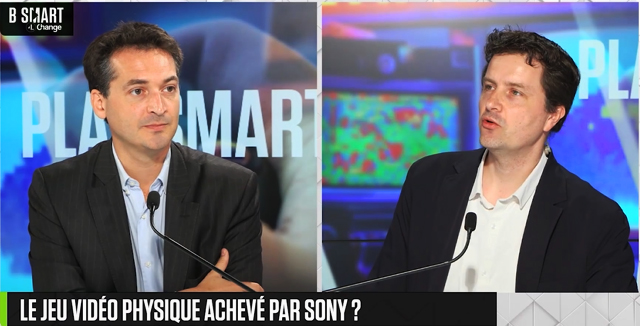
On July 7, 2026, Pierre-Xavier Chomiac de Sas had the pleasure of speaking once again with Nicolas Jucha on the Play Smart show, sharing his expertise on the ownership of video games and their content—particularly within the broader context of the shift toward digital-only distribution.
Central to the discussion was Sony’s recent announcement that it would cease production of physical disc-based PlayStation games starting in January 2028, marking the transition of its catalog to a fully digital format.
PCS Avocat analyzes the legal implications of this shift for the ownership of video games and their content.
https://www.bsmart.fr/video/34472-play-smart-13-juillet-2026
Check out our previous appearances discussing video games on the Bsmart channel and its dedicated programs.
- 2026.03 – Play Smart – Droit, IA & direction artistique des jeux vidéo
- 2025.04 – Play Smart – Jeux vidéo : UFC Que Choisir vs Steam
- 2025.12 – Bsmart – Contenus et contrôles des jeux vidéo
Sony Video Games: Exclusively Digital-Only Releases Starting in 2028
On July 1, 2026, Sony Interactive Entertainment announced that all future video game titles—whether first-party exclusives or third-party games—would be available solely in digital format, whether via the PlayStation Store or partner retailers. Sony justifies this decision by citing shifting consumer preferences, noting that digital sales accounted for 78% of full-game sales in 2025.
This strategy is part of a broader trend among publishers—such as Microsoft and Electronic Arts—to accelerate the shift to an “all-digital” model, driven by physical game sales figures that hovered around 12% in 2024.
Digital Video Games: Undeniable Benefits for Stakeholders
The shift toward digital video games and their distribution warrants an analysis of the advantages involved.
For players, digital distribution offers immediate access to games (instant downloads, no need to visit a store), space savings that are often overlooked, the elimination of risks associated with physical damage (such as scratches), access to an expanded catalog—including titles not released physically in certain countries—and sometimes attractive pricing via platforms like Steam (though this point requires nuance, as some digital games are more expensive than their pre-owned physical counterparts).
For game publishers, digital distribution eliminates manufacturing and logistics costs, improves margins for rights holders, simplifies the management of back catalogs by removing inventory constraints, and helps curb piracy—a phenomenon linked less to price than to game accessibility. For independent developers and studios, the shift to digital distribution has opened up low-cost distribution channels and the ability to reach niche audiences, alongside the rise of crowdfunding (Kickstarter, Ulule) and platforms like Steam’s Greenlight—exemplified by success stories such as Minecraft.
As discussed with Nicolas Jucha, digital distribution offers environmental benefits by reducing the production and transport of physical media; however, this must be balanced against the carbon footprint shifted to data centers, where electricity consumption remains a key concern.
Digital video games: varied and valid criticisms
Sony’s announcement has reignited various criticisms voiced in recent years regarding the shift toward digital video game content.
Gamers point to the loss of the “collectible” aspect of video games (no more physical objects, cases, manuals, or bonus items), a genuine reliance on a stable Internet connection, the inability to resell or lend games tied to specific accounts (Steam, Apple)—since the game is licensed rather than owned—and the widespread use of additional (micro)payments to enhance the gaming experience.
This system forces publishers to absorb new infrastructure costs (servers, storage, maintenance) and sharply rising marketing budgets needed to stand out in a saturated market, while also creating friction with physical retailers who still influence pricing—as seen with the PSP Go, which was boycotted by some distributors.
Independent studios will face intensified competition driven by easy market access and the challenge of gaining visibility.
Finally, retailers will undoubtedly be the hardest hit, facing revenue losses that could lead to store closures, job cuts, or even bankruptcy. Alternatively, this leads specialized retailers to diversify their products and services—potentially including their own platform for the digital sale of games.
Video Game Law: Purchase or License?
PCS Avocat has had the opportunity to present the legal issues surrounding the thorny question of ownership regarding video games and in-game content.
The legal characterization of transactions between publishers/platforms and players—whether concerning the video game itself or additional content (skins, extra lives, DLC, etc.)—is primarily governed by the publishers’ terms and conditions (EULAs). Relying on intellectual property principles, publishers retain ownership of the games and content, granting player-users merely a license to use them—a license that is revocable under conditions that are sometimes open to criticism.
La publication de Sophie Roman & Pierre-Xavier Chomiac de Sas sur le sujet

Platform Law: Sony and License Control
The issue of the shift to digital games and the question of ownership extends to other products and services. Several incidents involving Sony have highlighted the loss of user rights, particularly regarding audiovisual and cinematic content.
StudioCanal (2026). Sony announced that, effective September 1, 2026, over 550 films purchased on the PlayStation Store would be permanently removed due to the expiration of licensing agreements, with no compensation planned for customers. The company justified this decision by citing the fact that users do not hold ownership rights over the digital content they acquire.
Discovery (2023). In December 2023, “Discovery” content was slated for removal from PlayStation libraries, but a massive user backlash prompted Sony to reverse the decision. Notably, similar removals had already occurred in Germany and Austria in 2022, indicating a recurring practice rather than an isolated incident.
Read our interview : « Pourrai-je encore y jouer demain ? Quand le jeu vidéo bascule dans le tout dématérialisé »
Digital-only video games: what does the future hold for the second-hand market and collectors?
Sony’s announcement has sparked serious concern among professionals in the video game resale sector. Moving away from the disc format for new PlayStation titles is set to hurt specialized retailers like Micromania and GameCash; both the in-store availability of major releases and franchises and the broader practice of reselling used video games are potentially facing extinction.
Collectors and video game heritage. Beyond the secondhand market professionals, Sony’s announcement is equally concerning for video game heritage preservation groups, such as MO5.COM and the Odyssée museum. Without physical media, these organizations lose one of their primary preservation tools: the acquisition and physical conservation of games, independent of the publisher’s wishes.
This issue was central to discussions at the symposium “Online Video Games: Playing, Studying, Preserving”—organized by the BnF and the École nationale des chartes on June 8 and 9, 2026—in which PCS Avocat participated.
A purely digital game remains subject to the publisher’s technical and legal control via the End-User License Agreement (EULA); it can vanish overnight if servers are shut down, with no organization able to guarantee long-term access. The case of The Crew—withdrawn from sale and rendered unplayable following server shutdowns—illustrates this vulnerability, which sparked the European “Stop Killing Games” initiative.
In the absence of any legal deposit or archiving obligation imposed on publishers, these organizations must rely solely on the publishers’ goodwill to safeguard a portion of our digital cultural heritage.
Sony vs. Nintendo: Digital-only media vs. hybrid Game Key Cards
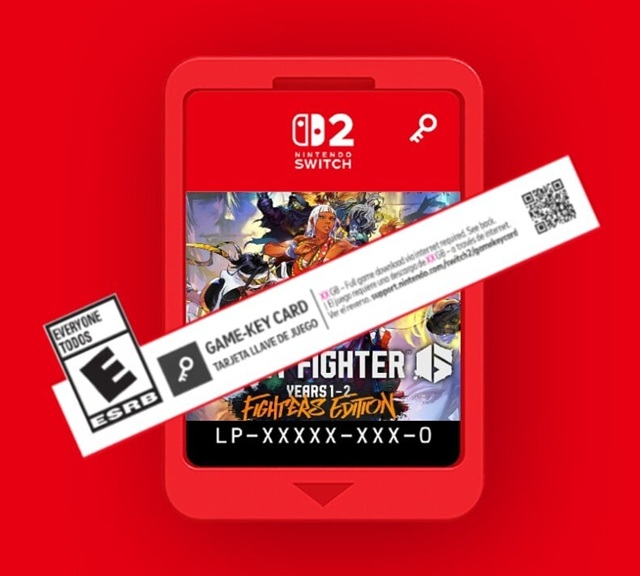
Sony’s strategic choice—following the path set by Microsoft—has reignited the debate surrounding the new model Nintendo is implementing for the Switch 2: the “Game Key Card” system, a hybrid video game media format.
PCS Avocat assists video game publishers, platforms, distributors, and studios in legally structuring their digital offerings (EULAs, terms of sale, additional content) and in anticipating risks related to ownership and long-term access to content.
Please do not hesitate to contact our team with any questions regarding these issues.