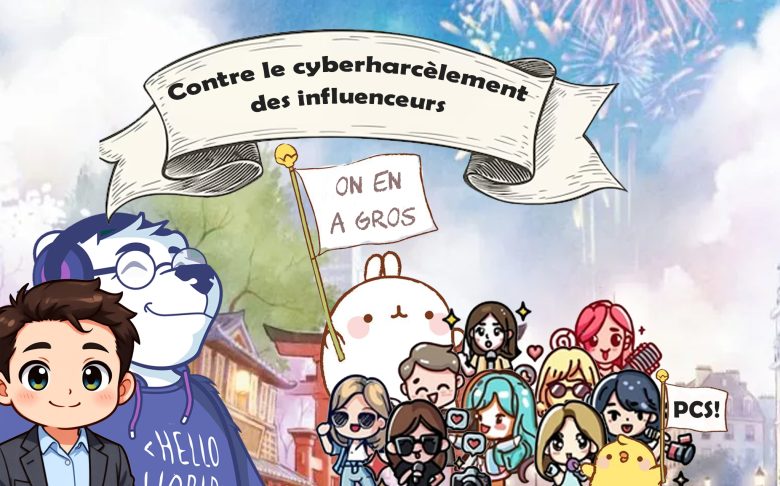
Presentation
Japan Expo Panel: Content Creators and the Fight Against Online Abuse
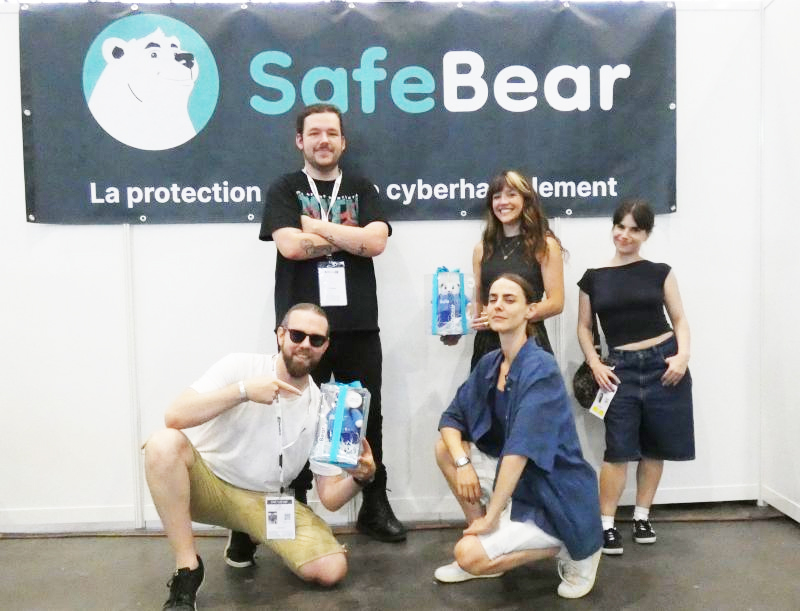
On Thursday, July 9, 2026, as part of the “Web Culture” program at Japan Expo Paris, PCS Avocat took part in the Safebear roundtable discussion focused on the cyberbullying of influencers. Speaking at the Mana stage at the Paris-Nord Villepinte Exhibition Center, attorney Pierre-Xavier Chomiac de Sas appeared alongside:
Marion Séclin, Coline Sicre, and JULI—content creators in fields such as audiovisual media, music, and “storyliving”;
Jérémy Guillon, CEO of Safebear, a cybersecurity solution addressing online abuse;
Yann Lescop, representing PointContact, an association dedicated to supporting victims of digital abuse.
The discussion shed light on the realities of the influencer profession, the extent of the cyberbullying they frequently face, the legal and judicial shortcomings regarding their protection and the prosecution of perpetrators, and—most importantly—the most effective courses of action.
A replay of the session will be available soon.



Influencer Law: A Range of Legal Provisions Consolidated by the 2023 Act
As online content creators, influencers are subject to a variety of regulatory provisions. Acting as both publishers and distributors, they bear editorial liability online, involving the concurrent application of the LCEN regime and the 1881 Press Law, depending on the nature of the content disseminated.
Since a portion of the influencer business model relies on promoting products and services, consumer protection laws fully apply to them—particularly regarding advertising restrictions and illicit commercial practices. Issues concerning personal data (GDPR), intellectual property, and trademarks also come into play where applicable, as do broader regulations governing the commercial use of their image.
This fragmented regulatory landscape long left the sector in a state of uncertainty, until the French legislature stepped in during 2023 to consolidate and clarify parts of this framework.

The Law of June 9, 2023: A Long-Awaited Clarification
In response to abuses and scandals involving the misleading promotion of speculative financial products, fraudulent dropshipping, and covert advertising for aesthetic medical procedures—issues particularly affecting consumer and minor protection—Law No. 2023-451 of June 9, 2023, established an official definition of commercial influencing:
“Natural or legal persons who, for remuneration, leverage their fame among their audience to communicate content to the public via electronic means—aimed at directly or indirectly promoting goods, services, or any cause—are engaged in the activity of commercial influencing via electronic means” (Article 1).
The Activity of Influencing: A Unique Form of Public Exposure
It is an activity involving high media visibility, comparable to that of politicians, athletes, actors, and other professionals in the creative and sports industries.
However, because their work centers on creating content for social media platforms and engaging deeply with online communities, influencers face a significantly higher risk of cyberbullying and other offenses.
As noted by the speakers, influencers build their fame on an ongoing, quasi-intimate relationship with their community; this exposes them to hostility of an intensity rarely encountered in other professions.
Cyber-harassment of content creators: a documented reality
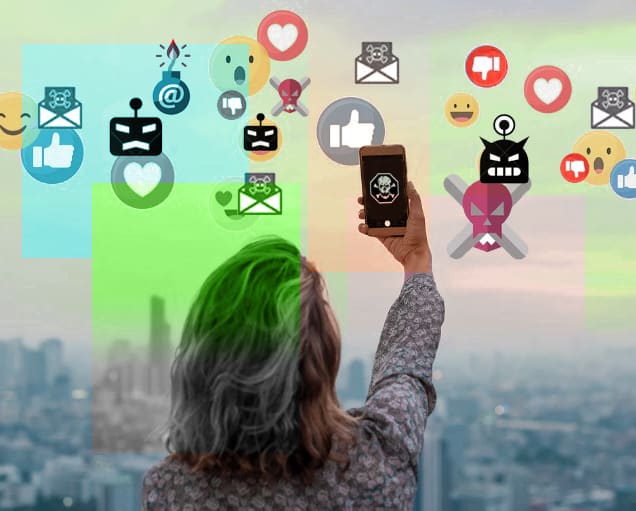
Cyber-harassment is defined by Article 222-33-2-2 of the Penal Code as the act of harassing a person through repeated remarks or behaviors intended to—or having the effect of—degrading their living conditions, resulting in an impairment of their physical or mental health.
The Schiappa Law of August 3, 2018, introduced the concept of “mob harassment” or “digital raids”: acts may be classified as harassment even if each perpetrator acted only once, provided their remarks—whether coordinated or not—form part of a series of similar comments targeting the same victim. The Court of Cassation confirmed this interpretation in a ruling on May 29, 2024, upholding the conviction of an individual who had posted a single message amidst a flood of hateful messages.
Content creators provide a particularly clear illustration of this phenomenon:
Marion Séclin, an actress and video creator, spoke of receiving 40,000 threatening and abusive messages following the 2016 release of a video on street harassment—a campaign she has frequently discussed in public, including at this roundtable discussion.
Marvel Fitness, a fitness influencer, was sentenced by the Versailles Court of Appeal on September 28, 2021, to two years in prison (with twenty-two months suspended) for harassing several other influencers and orchestrating digital raids against them by his community; this was the first final conviction handed down under the “mob harassment” provision established in 2018.
Maghla, a streamer with hundreds of thousands of followers on Twitch, secured the conviction of one of her harassers, who was sentenced to one year in prison by the Meaux Criminal Court. Cyberharassment targeting influencers is also distinguished by the wide variety of forms it can take: massive anonymous campaigns, raids organized by peers, repeated individual harassment, the prolonged mobilization of a community by an influential figure, doxing, swatting, deepfakes, etc.
Given this diversity of situations and behaviors, there is no single legal or judicial response; instead, each victim’s case requires a tailored approach regarding the actions involved.
Cyber-harassment of influencers: Advice and strategies
Marion Séclin’s account is illuminating in this regard: faced with tens of thousands of messages from anonymous accounts, the victim encounters a very concrete obstacle—it is physically impossible to file a formal complaint against every single perpetrator.
However, this sense of powerlessness—widely shared among content creators—should not lead to inaction. The legal framework has been significantly strengthened since 2018, offering three avenues of action that can be combined: criminal proceedings, civil litigation, and quasi-legal measures.
First and foremost, it is essential for influencers to surround themselves with a support network—including legal, medical, and professional advisors, moderators, and business partners—capable of supporting and guiding them through such ordeals, thereby easing the burden of cyber-harassment and ensuring its impact is not downplayed.
Influencers and Online Harassment: Managing the Criminal Law Response
While the weaknesses and limitations of criminal proceedings are well known, the value of such procedures should not be underestimated; it is important to understand their full range of benefits:
It serves as a wake-up call for perpetrators—often young and foolish—to face police custody, questioning by judges, summonses to criminal courts, convictions, and the entry of a harassment-related offense on their criminal record.
It offers reassurance to influencers to be able to delegate the prosecution of their attackers to trained, competent professionals.
With the help of legal counsel and lawyers, influencers can determine—based on the nature of their activities—which specific criteria and conditions should automatically trigger the filing of a formal complaint.
Cyber-harassment (Article 222-33-2-2 of the Penal Code) is punishable by one year in prison and a €15,000 fine; these penalties increase to two years and €30,000 if the victim is over fifteen, and up to three years and €45,000 if the victim is under fifteen. The “mob harassment” legal mechanism allows for the prosecution of perpetrators who contributed to the campaign only once, provided their action was part of a repeated pattern of harassment.
Law No. 2024-449 of May 21, 2024 (known as the SREN Law) introduced a significant new tool: Article 131-35-1 of the Penal Code now empowers judges to impose “digital banishment” as an additional penalty. This entails suspending the account(s) used to commit the offense for a period of six months, extending to one year in the event of a repeat offense. Upon being notified of the conviction, the platform in question must block the content, subject to a fine of €75,000.
Other criminal charges may usefully supplement the legal action: public insult and defamation (Law of July 29, 1881), invasion of privacy (Articles 226-1 et seq. of the Penal Code), or AI-generated content or composites that infringe upon a person’s image without their consent (Articles 226-8 and 226-8-1 of the Penal Code)—a charge that is increasingly relevant in the context of deepfake misuse.

Influencers and online harassment: assessing damages and civil litigation
Civil legal avenues offer a range of potential actions that, while often unfamiliar to litigants, can be highly effective when properly utilized.
Independent of criminal proceedings, an influencer who is a victim of harassment can hold the perpetrators civilly liable under Article 1240 of the Civil Code to obtain compensation for non-pecuniary damage, financial loss (such as the loss of partnerships), or damage to their reputation. The process of identifying and assessing these damages represents a valuable and scalable exercise for influencers.
Other claims may also be brought before civil courts, such as a request for the rapid removal of contentious content. Article 6-3 of the LCEN (formerly Article 6-I-8, recodified following the SREN Act) provides for an expedited procedure on the merits, allowing a party to petition the President of the Judicial Court—including against a hosting provider based abroad. While this procedure does not provide compensation for damages—a separate action remains necessary for that purpose—it enables the harmful activity to be halted quickly.

Legal protection for influencers: extrajudicial actions
Such legal actions must almost always be preceded or accompanied by non-litigious steps, which are often decisive for the subsequent proceedings:
Gathering evidence. As a crucial element of legal proceedings, the compilation of evidence must not be overlooked. Having a commissaire de justice (formerly a huissier or bailiff) formally record the facts establishes their material reality and recurrence before the court—a form of evidence rarely challenged in practice, unlike simple screenshots.
However, this process can entail significant costs and prove too slow to respond effectively to online infractions. Private entities such as Safebear have introduced digital solutions that automate information gathering and certify data integrity, offering tools better suited to modern practices.
Reporting to platforms, which are required to provide a mechanism for notifying them of illicit content (Art. 6-4-1 of the LCEN) and to prioritize reports from “trusted flaggers.”
Reporting to the PHAROS platform, the Ministry of the Interior’s portal dedicated to reporting illicit online content.
Issuing a formal notice to the hosting provider; this is a useful—and sometimes necessary—precursor to any liability claim against the host, given the strict legal framework (under the LCEN) governing the conditions under which a host can be held liable.
The value a lawyer brings lies precisely in their ability to coordinate these three levels of action—criminal, civil, and paralegal—based on the nature of the attack (coordinated raid, identified harasser, or isolated yet widely shared content), the urgency of stopping the harm, and the victim’s objectives—whether to halt the activity, obtain compensation, or secure a court ruling that publicly affirms the prohibition of the conduct.

Cyber-harassment: Protecting Content Creators and Their Businesses
The roundtable discussion focused on the ineffectiveness of legal and judicial avenues for recourse: criminal proceedings are lengthy and costly, and judgments are often disappointing due to a failure to prosecute all harassers or penalties deemed insufficiently deterrent.
It emerged that only a strategy combining communication with measures to combat potential cyber-harassment can effectively mitigate risks and stabilize an influencer’s professional activity. Such strategies must include identifying the specific conditions and situations that automatically trigger a legal response—whether criminal or civil. At the same time, however, other mechanisms involving private-sector partners can be implemented to safeguard the continuity of the influencer’s business.
PCS Avocat – Influencers, Content Creators & Cyber-harassment
Cyber-harassment targeting influencers is no longer a legal blind spot: from the 2018 Schiappa Law to the 2024 SREN Law, the available criminal and civil legal arsenal has been significantly strengthened. Yet, this has not eliminated the practical challenge—aptly described by the roundtable participants—faced by victims confronting thousands of anonymous perpetrators. It is precisely at the intersection of the law and real-world realities that the lawyer’s role comes into play.
PCS Avocat thanks Japan Expo Paris and Safebear for the invitation, as well as Jérémy Guillon, Marion Séclin, Coline Sicre, and JULI for the high quality of the discussion.
Une question sur le statut juridique de votre activité d’influenceur, un contrat de partenariat à sécuriser, ou une situation de cyberharcèlement à traiter ? Contactez notre cabinet.
Pour aller plus loin, consultez notre page dédiée au droit des influenceurs, streamers et créateurs de contenu, notre guide sur le contrat d’influenceur et notre analyse du statut et des activités des influenceurs.