Presentation
In the latest legal newsletter from the National Video Game Syndicate (Syndicat National des Jeux Vidéo), Me Chomiac de Sas provided an analysis of an initiative by video game players seeking to protect the rights associated with their game purchases.
In June 2026, the European Commission declined to mandate that publishers keep their games playable after their commercial lifespan has ended, thereby upholding the rights of studios over their creative works. At the same time, however, the Commission reiterated the obligations publishers have toward players—who, with the shift to digital distribution, have effectively become mere consumers.
Video Game Rights & Server Shutdowns: The Case of “The Crew”
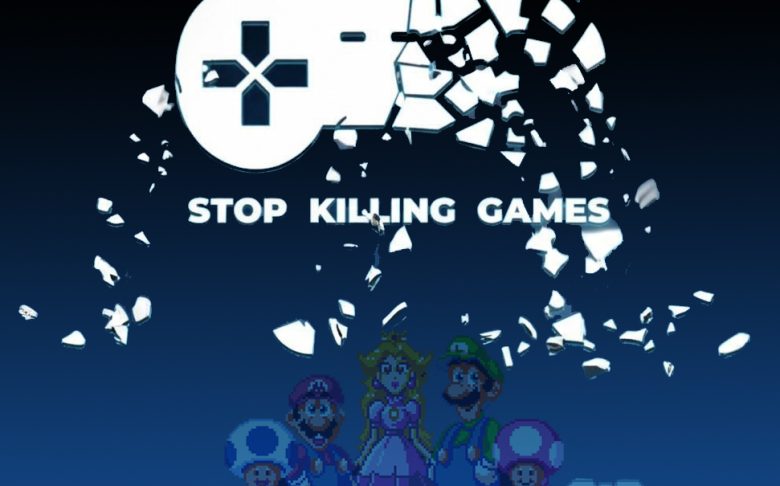
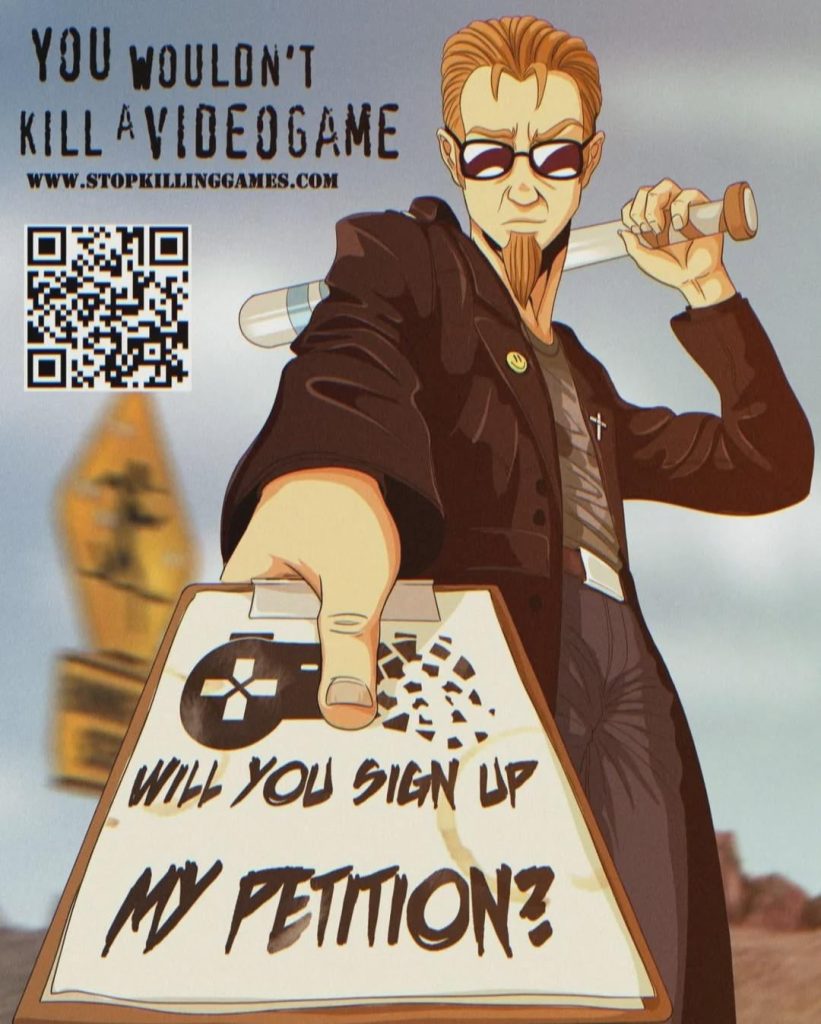
Exasperated by the shutdown of the servers for the video game “The Crew”—which rendered the title completely unusable for its consumers—a collective of players launched a global movement called “Stop Killing Games.” The initiative challenges the absolute and discretionary power that publishers hold over the operation and accessibility of their games. In Europe, this took the form of a European Citizens’ Initiative (ECI) titled “Stop Destroying Videogames,” which garnered over 1.2 million validated signatures. This led to a public hearing at the European Parliament on April 16, a plenary debate on May 21, and, ultimately, an official response from the European Commission on June 16, 2026.
Read: Interview on Video Game Ownership and the European Petition
The core issue was straightforward: players sought to compel publishers to ensure continued access to the games they had acquired. The Commission’s response is equally clear: the studio remains—and will continue to be—the holder of the rights associated with the operation of the game. Players—especially those who have acquired games in digital format—possess only the rights afforded to them in their capacity as consumers; rights that are, however, intended to be further strengthened.
Video Game Ownership: It’s Always Been a Usage License
A persistent, modern-day misconception surrounds the nature of players’ rights regarding their video games—a confusion exacerbated by the global shift toward the dematerialization (digitalization) of content. A player has never owned a video game as a creative work; they have only ever owned the physical medium, which they were free to resell.
Read: 2025.04 – Play Smart Interview: UFC-Que Choisir vs. Steam – Video Game Ownership
From a legal standpoint, the debate over the nature of video games and its implications for ownership has gradually moved away from classifying them simply as “software”—a category that would have offered players more favorable, atypical protections. Instead, video games are recognized as creative works subject to standard copyright law. Consequently, they are not governed by the “exhaustion of distribution rights” doctrine; each purchase constitutes a usage license rather than a transfer of ownership. As a result, digital content “provided” to a player can never be resold by that player.
A corollary to this legal evolution is that the player holds only a personal right of use, with the rights holder setting the terms of access—including when that access may come to an end.
Read: Digital Video Games, Player Ownership, and Intellectual Property
Protecting Players’ Rights: Closing Time, Gamers! Last Call!
The Commission’s opinion aligns with this logic. It states that it “cannot propose a legal obligation to ensure that video games remain playable once the publisher ceases to provide them for commercial reasons.” In doing so, it reaffirms the rights holder’s freedom to decide whether—and how—their work is exploited.
The Commission supports this position with pragmatic arguments: some games rely on third-party licenses that are limited in duration (such as middleware, trademarks, or music). Server infrastructure and anti-cheat systems may be considered trade secrets; maintaining a playable game can entail significant costs for the industry; furthermore, a game left without support would expose players to cybersecurity risks.
Read: Digital Sony video games: Who will own the games?
Although the ICE’s request was not acted upon, it has nonetheless resonated within the French parliamentary debate. Bill No. 3169, introduced on September 15, 2026, proposes a form of “compulsory exploitation” of video games, regardless of the studio’s wishes. It would task the BnF (National Library of France)—or a dedicated entity—with preserving and providing access to games that are no longer being supported or made available elsewhere. However, the text faces significant hurdles, both in terms of European Union law and the constitutionally protected right to property—the very pitfalls the Commission has alluded to.
Read: June 2026 – BnF Symposium – Protecting Video Game Heritage: Law & Video Games
Nevertheless, while publishers hold legitimate rights over their games, this does not exempt them from obligations toward players, who are entitled to a baseline of consumer protections.
Video Games: Players as Consumers, Studios as Obligors
If players’ prerogatives are reduced to mere access rights that can be revoked at will, they must be clearly informed of this:
Before making a purchase, players must be made aware of the contract duration, termination conditions, and the game’s reliance on external servers (Directive 2011/83/EU, Art. 6);
Any planned shutdown must be communicated to players as soon as the decision is made (Directive 2005/29/EC, Art. 7);
A contractual clause allowing for a shutdown without cause or prior notice is likely to be deemed unfair;
A premature shutdown entitles players to a refund, including for any unused virtual currency (Directive (EU) 2019/770).
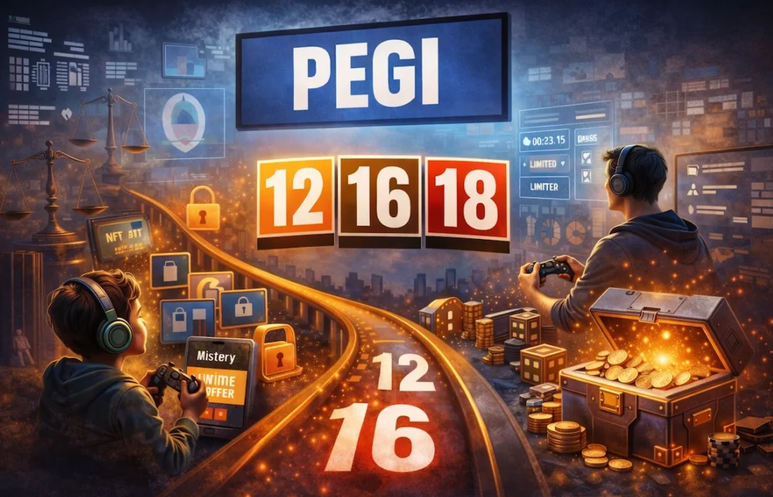
These rights are part of a broader challenge to practices within the video game industry—such as the use of virtual currencies to obscure actual costs, misleading countdown timers, and aggressive purchasing incentives. For instance, the Dutch consumer authority fined Epic Games €1.1 million for employing such “dark patterns” in the game Fortnite. In March 2025, the Consumer Protection Cooperation (CPC) network established principles regarding the use of virtual currencies in games. The forthcoming Digital Fairness Act targets these types of practices, while the recently announced KIDS Act (introduced on September 17) could mandate a design approach that protects minors by prohibiting mechanisms that encourage compulsive usage.
In light of these developments, the broader discussion appears to be shifting toward questioning the business models of certain studios, rather than seeking a comprehensive rebalancing of the video game industry as a whole.

Legal Obligations for Video Game Studios: So, What Now?
For video game studios, the European Commission’s response is a double-edged sword. It shifts the issue raised by players from the realm of intellectual property to that of contract law. Obligations stemming from consumer protection law—often largely overlooked in End-User License Agreements (EULAs)—will face increasing scrutiny in the coming years from consumer protection authorities, advocacy groups, and highly vigilant European bodies. Studios will need to account for these obligations within the contractual frameworks of their games, and potentially even prepare for service continuity—for instance, by providing an offline mode or enabling community-run servers.
The situation remains curious, if not paradoxical. Studios, initially focused on the development and release of their games, must now also incorporate “end-of-life management.” Contemplating a game’s demise before it is even born—a rather peculiar exercise.
Video Game Studios & Player Communities – Lawyer Specializing in Digital Law
Abuses observed within the video game sector have prompted national and European legislators to impose new obligations regarding players. While intellectual property rights remain fundamentally protected, the terms under which games are operated—and the requirement to provide players with transparent information about game mechanics—are becoming increasingly complex for video game studios and publishers.
For over a decade, PCS Avocat has advised video game studios, publishers, and distribution platforms on a full range of legal matters, including the drafting and review of EULAs (End-User License Agreements) and partnership contracts, intellectual property, regulatory compliance, and the management of online communities.
Learn more: Legal Guide – The Rights of Video Game Players
To learn more : Guide juridique – Les droits des joueurs de jeu vidéo
Références : J. Groffe-Charrier, « Initiative citoyenne européenne “Stop destroying games” : la Commission confirme les droits des éditeurs », Dalloz actualité, 24 juin 2026; M. Barba, « Stop Killing Games (ou le renouvellement manqué de la fabrique du droit européen) », D. 2026, p. 1265; S. Merabet, « Jeu vidéo – Un an de droit du jeu vidéo », Comm. com. électr. n° 9, sept. 2026, chron. 9. ; L. Jalabert, « Arrêt de la production de disques de jeux sur PlayStation dès janvier 2028 : le marché de l’occasion est-il révolu ? », Dalloz actualité, 30 sept. 2026; CJUE, 3 juill. 2012, UsedSoft, C-128/11 ; CJUE, 23 janv. 2014, Nintendo, C-355/12 ; CJUE, 19 déc. 2019, Tom Kabinet, C-263/18 ; Cass. 1re civ., 23 oct. 2024, n° 23-13.738, Valve; Proposition de loi n° 3169 visant à garantir les droits des joueurs et joueuses et la pérennité des jeux vidéo, AN, 15 sept. 2026