Presentation

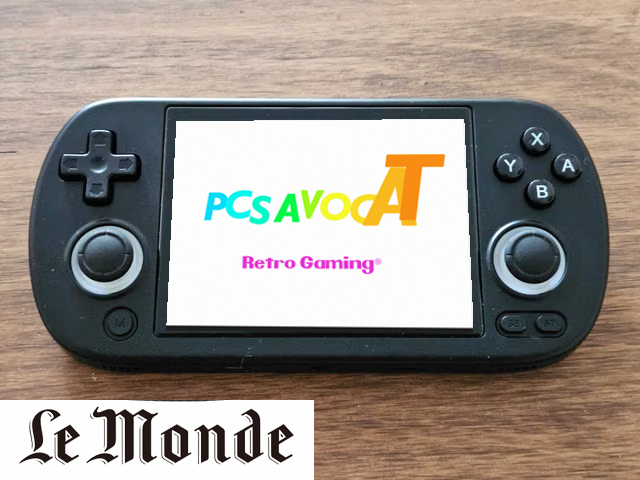
On August 22, 2026, Maître Chomiac de Sas was interviewed by Hugo Ruher for Le Monde to discuss the sale of “retro” consoles and emulators, as well as the associated legal framework.
The article highlighted the wide range of products available and, crucially, underscored the legal reality: virtually all video game ROMs and ISOs offered via products or services independent of the original manufacturer and studio constitute illegal counterfeits subject to criminal penalties.
The creation of emulators raises more complex issues depending on whether manufacturers’ technical protection measures were hacked in order to understand their underlying mechanisms.
Read the full article on Le Monde‘s website.
The Retrogaming Market – Video Game Abuses and Tolerances
Recent years have seen a surge in game consoles offering a vast array of video game titles released over the past few decades. These products generally consist of a compilation of emulators designed to replicate the functionality of classic video game consoles, bundled with ROMs of popular games.
Beneath the stated goal of preserving video game heritage lies a significant market for retro gaming and a major issue regarding the protection of intellectual property rights held by studios and rights holders.
Console Emulators – Video Game Law
As a reminder, emulators are software programs that replicate the behavior of a game console or computer by either drawing inspiration from or copying their operating systems. Regarding the law and the legality of their use, it is important to distinguish between two types of emulators based on the method used to create them:
An emulator compiled after extracting the original operating system may constitute copyright infringement regarding the software.
An emulator created through a process of designing and reconstructing the console’s mechanisms ex nihilo (from scratch) does not appear to violate intellectual property rights.
Growing litigation concerning the legality of available emulators has involved iconic manufacturers, notably Sony with its PlayStation console (Sony v. Connectix – 2000) and, of course, Nintendo with the famous Switch (Nintendo of America v. Tropic Haze LLC).
In late August 2027, Nintendo succeeded in having over 400 repositories linked to Switch emulators removed from the GitHub platform by issuing seven DMCA notices citing the circumvention of technical protection measures.

Video Game ROMs and ISOs – Copyright Infringement
As video games are relatively recent assets in the context of rights protection, they all remain eligible for intellectual property protection to this day. Consequently, no form of exploitation may be undertaken without the consent of the manufacturers or studios holding the economic rights to these complex works.
It is worth noting the significant number of legal proceedings that have led to the shutdown of websites offering video game ROMs and ISOs, based simply on copyright and trademark infringement.
Legal arguments invoking the private copying exception—pursuant to Articles L. 331-6 et seq. of the Intellectual Property Code—remain difficult to sustain when the device used to make the copy required a “linker” interface capable of bypassing the relevant protection measures.

Video Games and Consoles – Preserving Video Game Heritage
Gamers have frequently raised concerns about the inability—in certain instances—to access or replay historic titles. This issue is particularly relevant given contemporary challenges surrounding the shift toward digital-only games (see our analysis of the “Stop Killing Games” campaign).
Read our presentation from the symposium organized by the BnF (National Library of France) on the preservation of video game heritage.
Emulators, ROMs & Retro Consoles – Digital Law Specialist
The rise of Android-based retro consoles highlights a recurring tension in digital law: the conflict between technical innovation—driven by a genuine preservation community—and a legal framework primarily built around copyright and software protection. Emulators, ROMs, abandonware, and publisher tolerance: these concepts intersect without being identical, and their legal classification directly determines the risks faced by manufacturers, retailers, and users alike. In a sector where usage patterns evolve faster than case law, proactive legal guidance allows stakeholders to anticipate these gray areas rather than simply reacting to them.
PCS Avocat assists video game and esports professionals with all these issues:
Manufacturers and importers of retro/emulation consoles, regarding the legal security of their business models and the analysis of infringement risks associated with pre-loaded ROMs.
Video game publishers and studios (rights holders), in defending their intellectual property against unauthorized use of their catalogs.
Associations and video game heritage preservation projects, helping to structure offerings that comply with copyright law (licensing, partnerships with rights holders).
Emulator developers, to secure their reverse engineering practices and anticipate litigation risks.
Distributors, retailers, and e-commerce platforms, regarding the compliance of their commercial practices (fair dealing, pre-contractual information, advertising).
Influencers and content creators specializing in retrogaming and tech, who face exposure as promoters of these products.