Table of Contents
Once again this summer, Villepinte became the European capital of Japanese culture for four days during the latest edition of “Japan Expo.” The law firm PCS Avocat was pleased to attend—not only as a visitor but also as a speaker alongside clients and professional partners from the sector.
It was an opportunity to reflect on the event’s significance, the challenges involved in organizing it, and the unique legal issues associated with it.
Japan Expo: An impressive, complex, and extraordinary event
A 25-year history. Founded in 1999 by a small group of enthusiasts, Japan Expo has established itself year after year as Europe’s largest trade fair dedicated to Japanese culture.
Its continuous growth has been marked by a need to adapt to several unusual challenges: a 2005 cancellation due to safety concerns regarding crowd size, and forced interruptions in 2020 and 2021 caused by the Covid-19 pandemic.
Organizers across the various editions—culminating with SEFA Event—have all had to contend with the constraints inherent to this type of event: public safety, organizational liability, and the management of partners, participants, sponsors, and, of course, attendees.
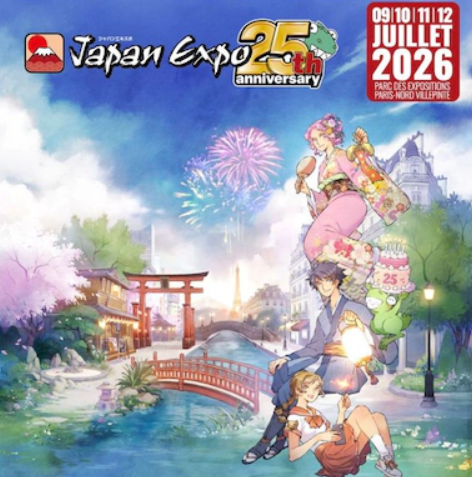
Japan Expo 2026: A 25th-anniversary edition. Marking its quarter-century milestone, Japan Expo took place from July 9 to 12, 2026, in Villepinte. The event brought together over 800 exhibitors and more than 500 speakers, drawing an attendance of approximately 250,000 visitors.
Stands and themes. Manga and publishing, figures and merchandise, video games and esports, fashion and textiles, independent artists: the themed halls at Japan Expo each drive their own economic activity and involve specific contractual issues. We visited:
The hall dedicated to manga and publishing, bringing together major French publishers and Japanese imports, raising intriguing questions regarding copyright and distribution law.
The sections for figures and merchandise—the home of official licensing and merchandising—and the areas for video games and esports, where tournaments and gaming events take place.
The fashion and textile stands, featuring independent artists (“Artist Alley”), and the stages dedicated to cosplay contests, where professionals and costumed visitors mingle.
A magnificent and fascinating event for lawyers. Beyond the festive atmosphere, Japan Expo offered a prime vantage point for a digital law attorney to observe a wide range of issues: exhibitor contracts; the legal status of creators, influencers, exhibitors, hosts, and speakers; child protection; image rights for cosplayers; counterfeiting; and contracts involving influencers and esports players.
This rich blend of culture and law made the event truly exceptional.
PCS Avocat: Speaking engagements, meetings, and reunions at Japan Expo
Partners and clients. The event provided an opportunity to reconnect with several clients who were exhibiting or speaking at the 2026 edition.
Cyberbullying of influencers. Our presence at Japan Expo also offered the chance to participate in a seminar on the cyberbullying of influencers, organized in partnership with Safebear—a French company specializing in the detection of cyberbullying and online toxicity using artificial intelligence. This session addressed the legal framework governing mob-style cyberharassment, digital raids, and the specific obligations incumbent upon influencers in this regard—an area of law that is still emerging but is increasingly being invoked in court.
Access our dedicated publication and the presentations outlining the associated issues.
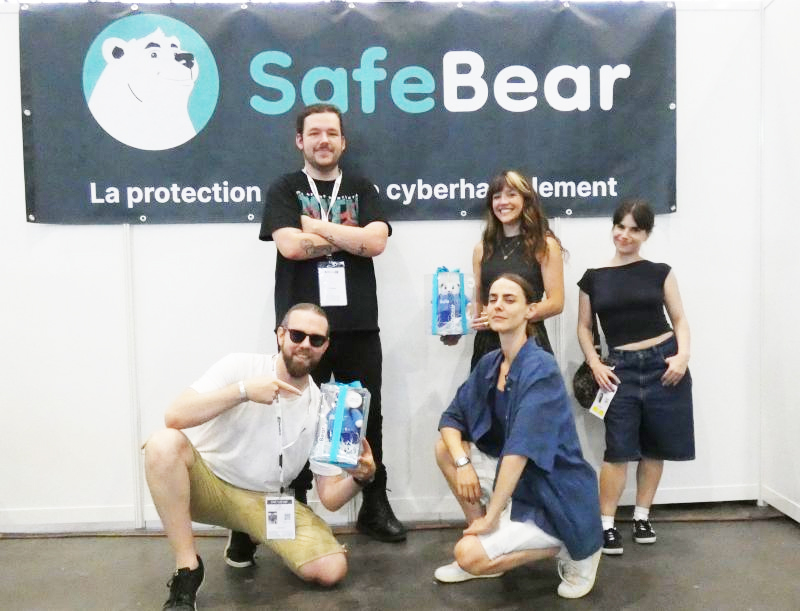
Professional meetings and reunions. Japan Expo also provided an opportunity to reconnect with professionals from a sector that—despite its growth—remains a relatively tight-knit community. We had the pleasure of crossing paths with teams from Women in Games France, France Esports, Project Conquerors, Afrogameuses, Ankama, Espot Paris, the MO5 association, and more.
A special shout-out to the Fluffy Cat Studios booth; we left with personalized keychains.

Cosplay Law: A Sector with Complex Legal Implications
Cosplay is arguably one of the event’s most impressive features, owing both to the sheer number of participants—exhibitors and visitors alike—engaged in the practice and to the richness and complexity of the costumes themselves. This activity gives rise to a wide range of legal issues affecting all those involved.
The contractual frameworks governing cosplay competitions vary depending on the nature of the event: whether they are official contests tied to the trade show, events organized directly by a brand at its own booth, or competitions run by independent associations. Each of these arrangements raises distinct questions regarding liability, rules of conduct, and ownership of the images produced during the competition.
Furthermore, in recent years, the cosplay community has been the focus of several controversies regarding racism and discrimination—ranging from accusations of “blackface” against cosplayers who altered their skin tone to portray a character, to instances of racist harassment directed at Black cosplayers portraying non-Black characters. These incidents, widely discussed on social media, raise questions concerning anti-discrimination laws and media-related criminal law, as well as the private regulations implemented by the competition organizers themselves.
Finally, intellectual property rights holders are taking an increasingly strict stance regarding cosplay costumes, as evidenced by the recent policies adopted by several publishers toward cosplayers and creators inspired by their licensed properties. This shift—following years of de facto tolerance—is fundamentally altering the balance between fan creativity and respect for copyright law.


Japan Expo, Customs, and Counterfeiting: The Law and the Crackdown on Fan Art
Since 2012, French customs officials have inspected the aisles of Japan Expo each year to detect counterfeit goods. The 2026 edition saw a particularly high-profile incident: customs agents seized unlicensed fan art in the “Artist Alley,” reigniting the debate over the distinction between inspired creation and counterfeiting under the Intellectual Property Code.
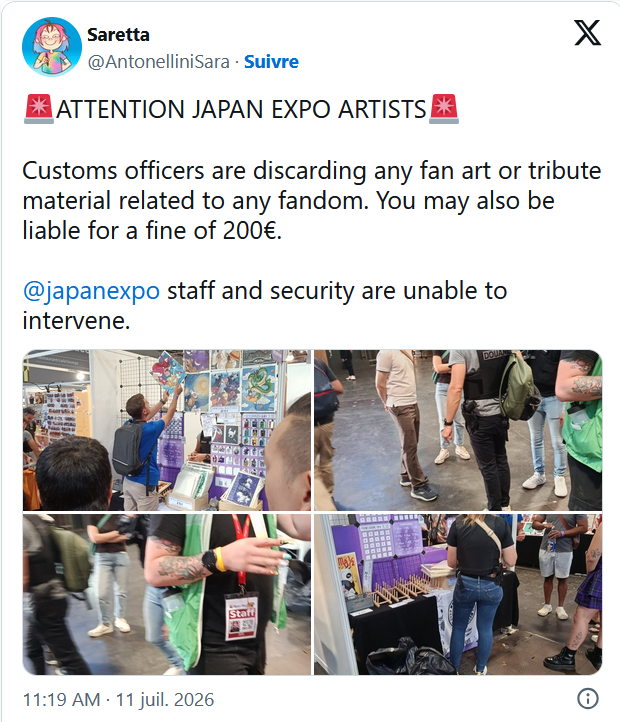
The intellectual property law applicable to these creations; the policies of publishers and creators regarding the toleration or prosecution of infringements at the trade show, the types of works involved, and the rules governing their oversight and admission by the organizers; as well as the associated liabilities—those of the creator, the trade show organizer, and the—more indirect—liability of the rights holder who initiated the report—all constitute technical legal issues requiring professional advice.
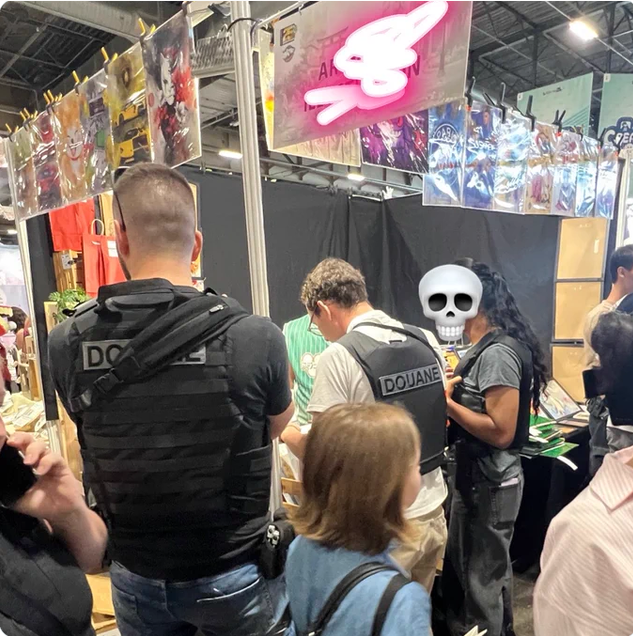

Some exhibitors and event participants have drawn attention to the presence of customs services, citing concerning statements and remarks. Indeed, certain messages could potentially constitute a criminal offense.
Some messages could be interpreted as encouraging or facilitating fraud, an offense punishable under the Customs Code (Art. 399). Similarly, any instruction given to conceal illicit or counterfeit goods constitutes the offense of complicity under general criminal law—applicable to customs offenses (Art. 121-7 of the Penal Code).
Images and Content Creation: Legal Rights for Photographers and Influencers
Two categories of participants, often conflated, require distinct legal treatment. On one hand, there are the amateur and professional photographers at the event; their status—whether press-accredited or general visitors—largely determines their rights regarding the photos they take (particularly of cosplayers) and how those images may be used after publication.
On the other hand, there are the influencers and content creators invited to the event. Their status, brand contracts, and obligations regarding advertising transparency are strictly regulated, notably by the Law of June 9, 2023, governing commercial influencer activity.
Regardless of their status, the use of cosplayers’ images—and their dissemination online, particularly on social media, in the context of Japan Expo—requires not only the cosplayers’ consent but, more importantly, full respect for their broader rights and the associated legal and regulatory obligations.
Esports at Japan Expo: Video Game Competitions and/or Gaming Events
An extension of the broader gaming sector, esports—in the form of organized video game competitions featuring specific titles—has found its way into Japan Expo in various forms. The presence of major industry players—such as IJC Esport, France Esport, and Project Conqueros—demonstrates the significant role the sector has assumed in recent years. The presence of players, coaches, hosts, and specialized influencers at booths, alongside on-site tournaments designed to promote video games, highlights the legal complexities of the sector—an area in which our firm has developed cutting-edge expertise.
The French legal framework for esports, stemming from the 2016 “Digital Republic” Law, still struggles to strike a stable balance between the regulatory regimes governing sports, event management, and advertising partnerships—a hybrid nature that is clearly reflected at an event like Japan Expo. Japan Expo Sponsorships and Partnerships: The Legal Aspects of Collaborations
The diversity of partner organizations present at the convention—professional associations, clubs, brands, publishers—reveals the difficulties associated with classifying partnerships and their contractual framework: traditional sponsorship, charitable giving, co-organization of events, etc.
Professional partnerships encompass a wide variety of situations, constraints, and specific legal issues that require close attention. Read our overview of the associated issues here.
Our firm specializes in the legal aspects of these matters. Please contact us for further information.